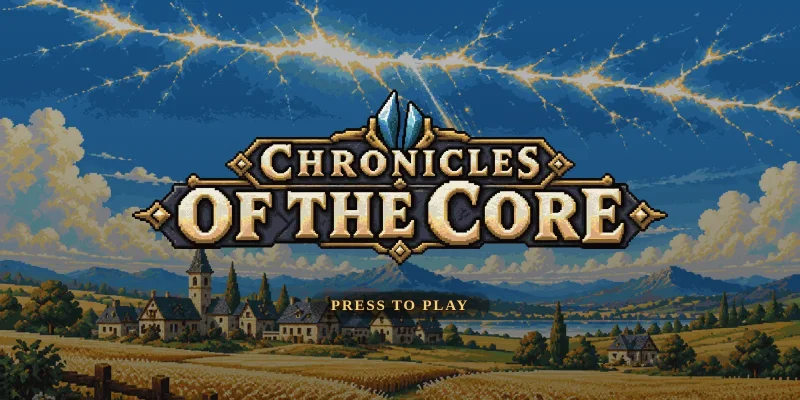
 Chronicles of the CoreReal-time strategy game in the browser with four races, heroes and a campaign
Why a strategy game of my own?
I missed the older, simpler games in the RTS genre. That's where the idea of building my own came from.
Chronicles of the Core
Chronicles of the Core is a real-time strategy game in the browser, with Warcraft III as the model for the mechanics. You build a base, gather gold and lumber, train an army and lead up to three heroes who level up and gain new abilities. All the content is original: the world, the peoples, the units and the story.
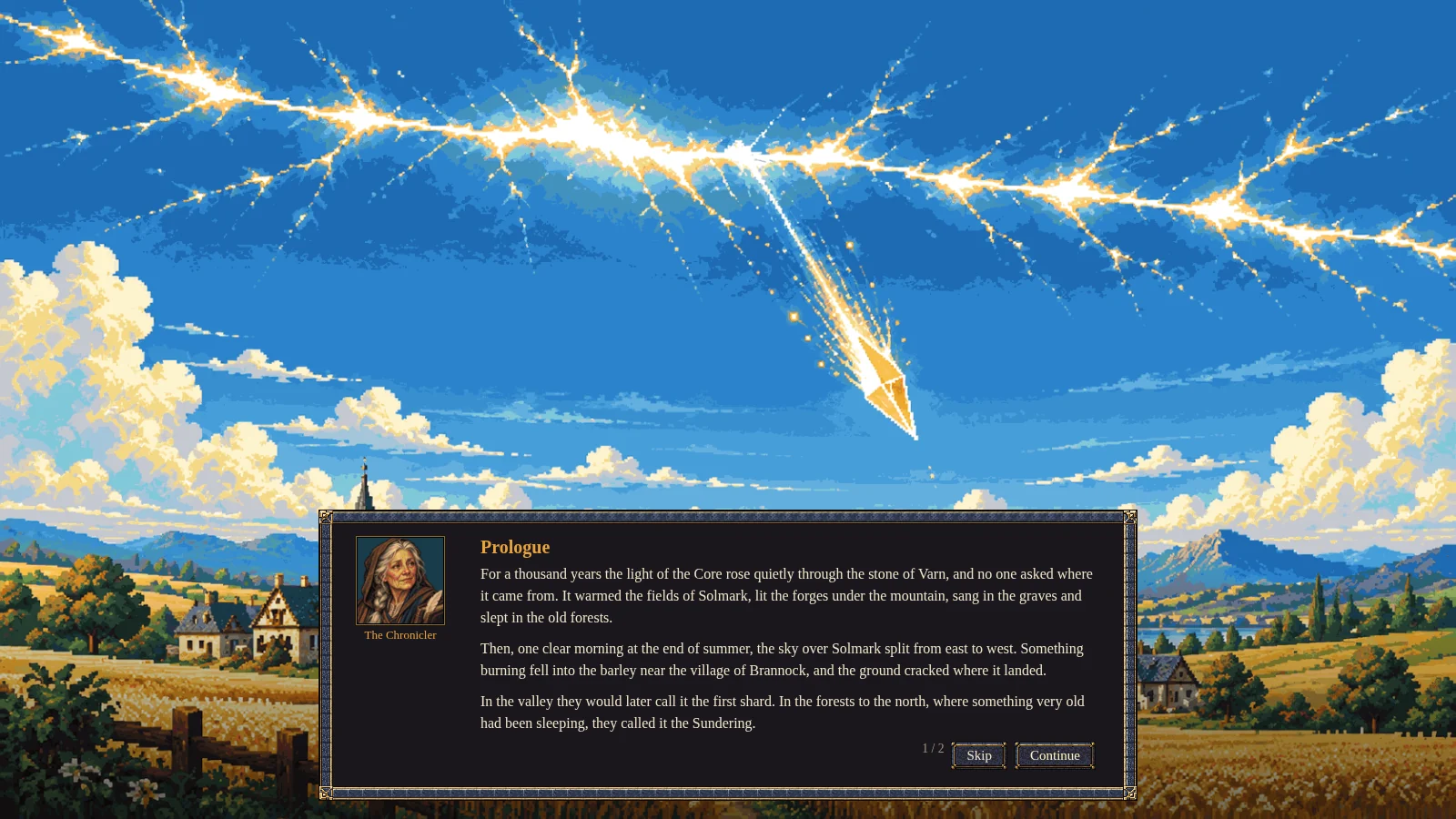
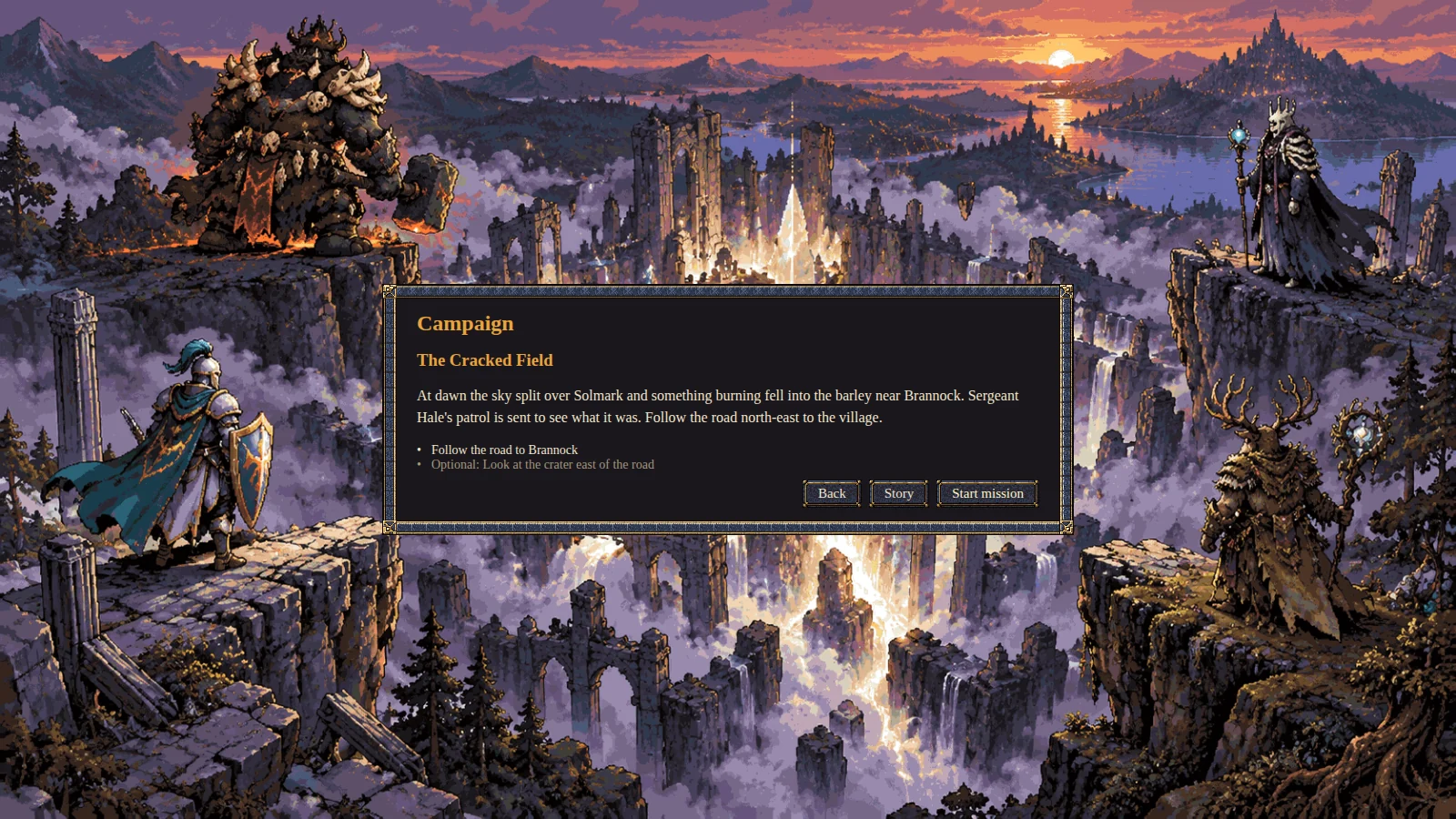
The world is called Varn and is built around the Core, a living crystal deep underground. Now the seal around it is cracking, shards of the Core are hurled up out of the ground, and four peoples want four different things from it:
- Solmark Concord – humans and dwarven engineers – want to tame the Core
- Ashborn Clans – warriors from the volcanic rift – want to set its fire free
- Hollow Choir – the dead the Core swallowed – want to wake it fully
- Thornwake – living forest and moonlight – want to seal it again
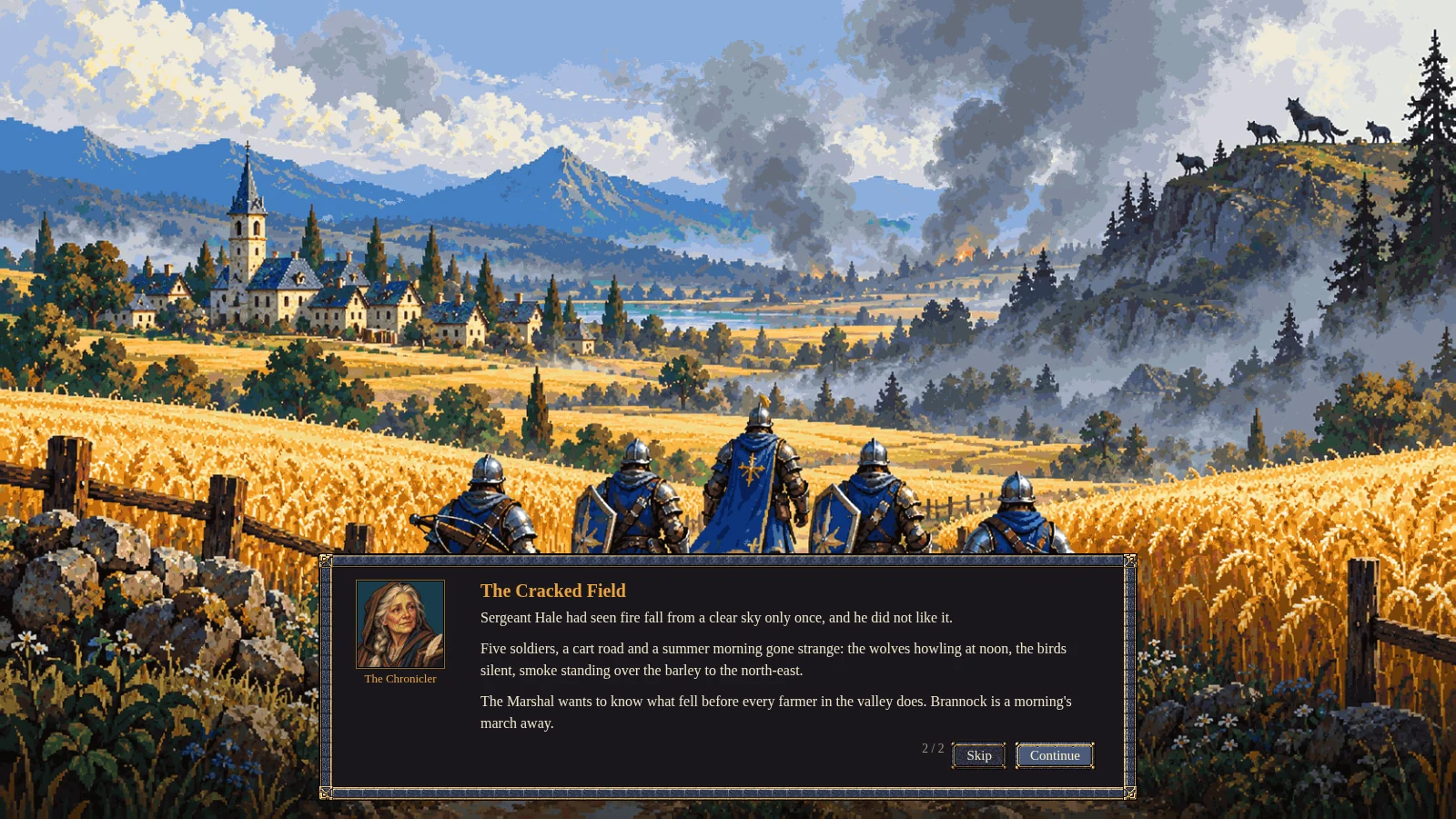
None of them is the evil one, and the campaign is played from all four sides: a prologue, four acts of three missions each and an epilogue. The narrator reads every page before and after the missions.
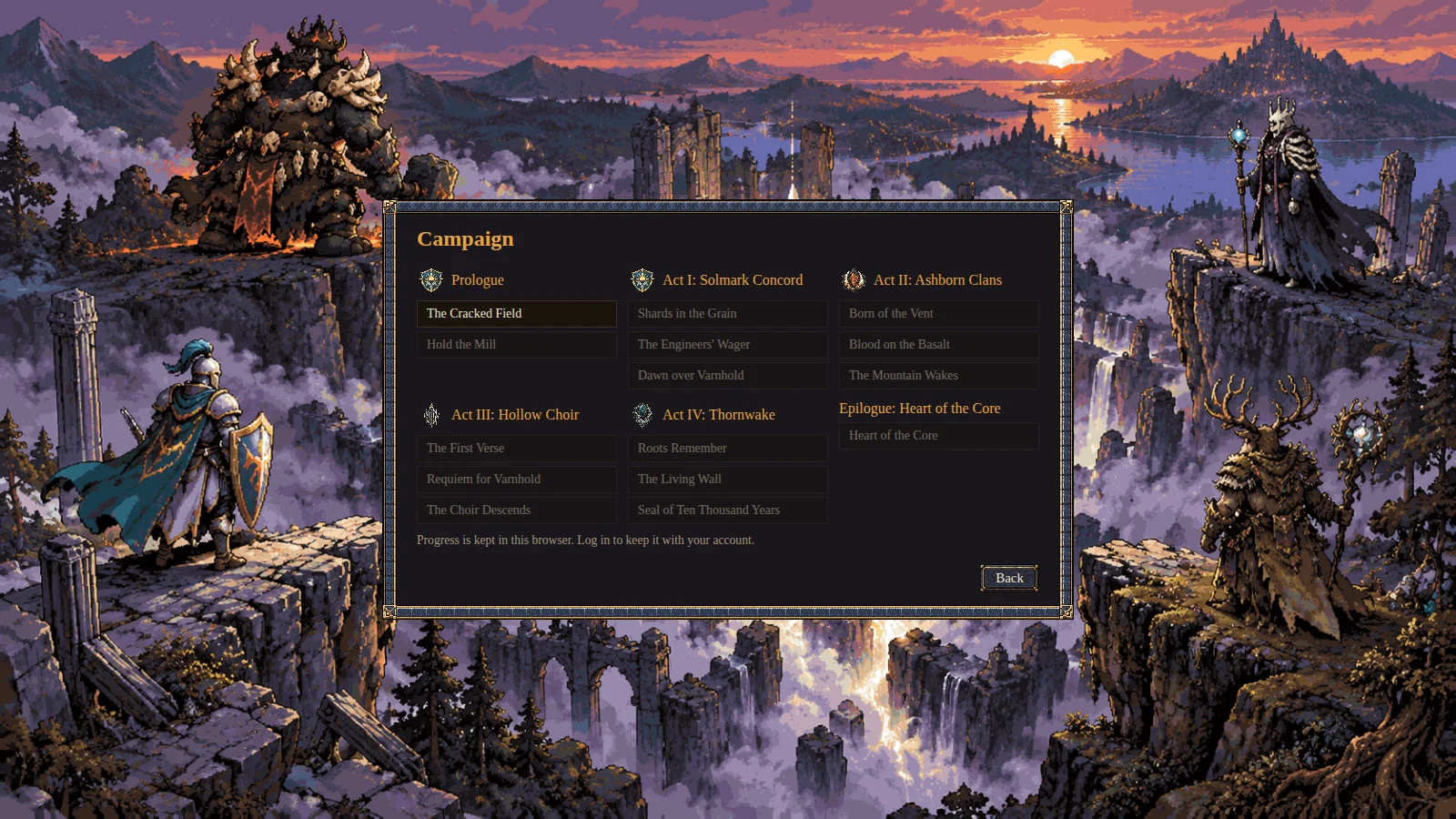
What the game has:
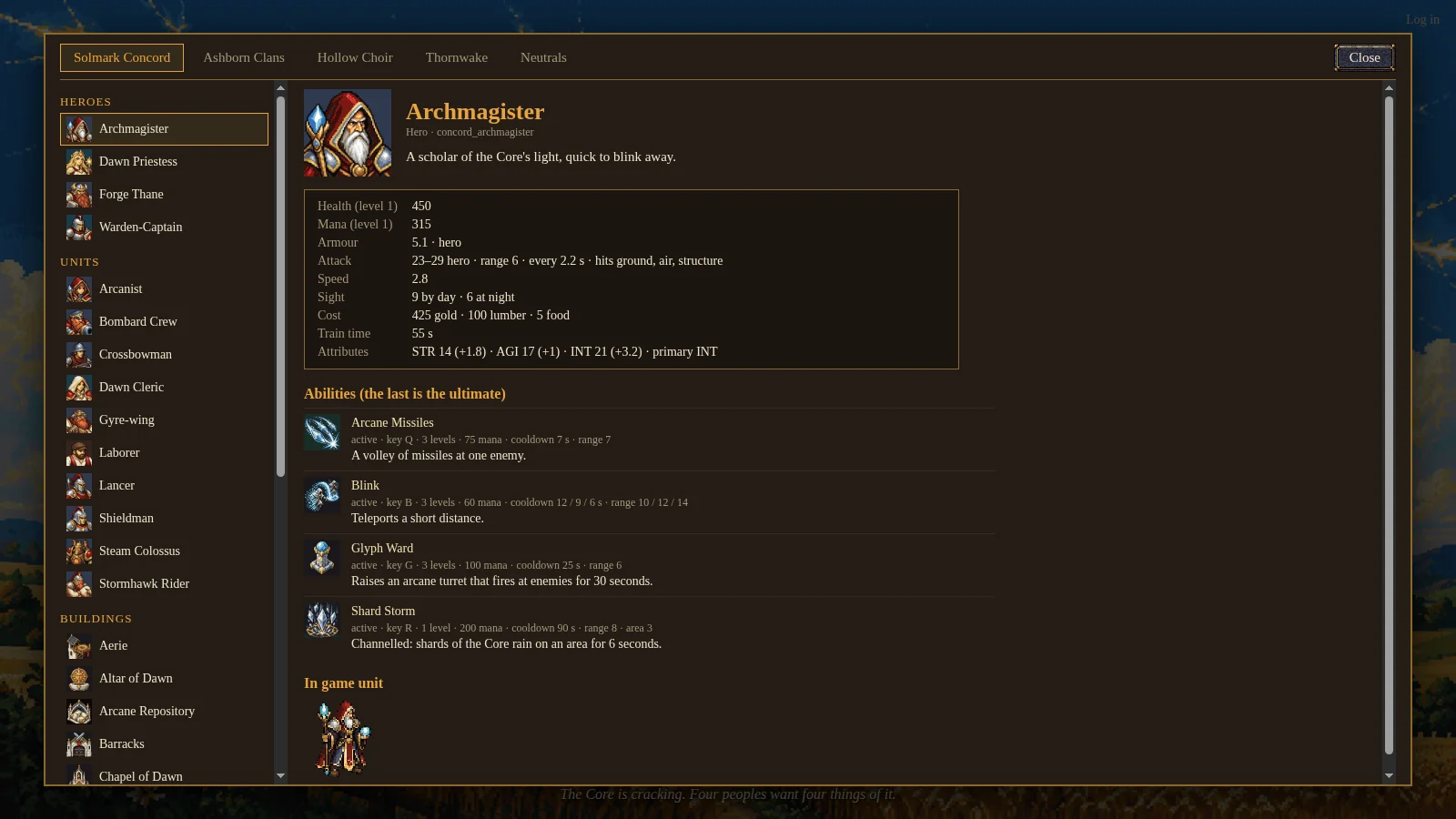
- four races, each with a worker, nine combat units, four heroes and around twelve buildings
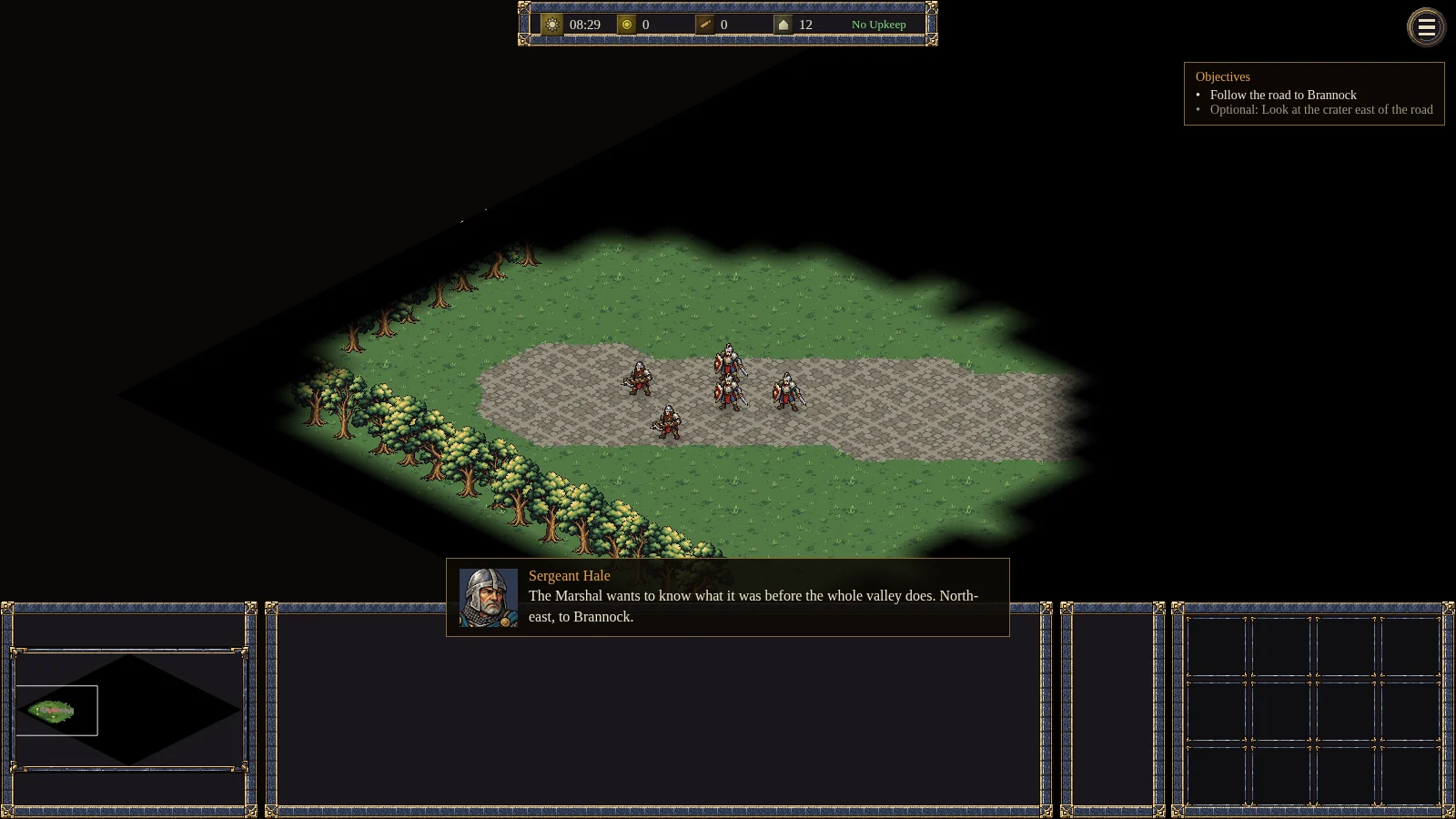
- creeps, items, upkeep and day and night – at night your sight shrinks and creeps sleep
- Coreshards, our own mechanic: a hero carrying a shard gains an ability that depends on the race, and the shards pull the players towards the middle of the map
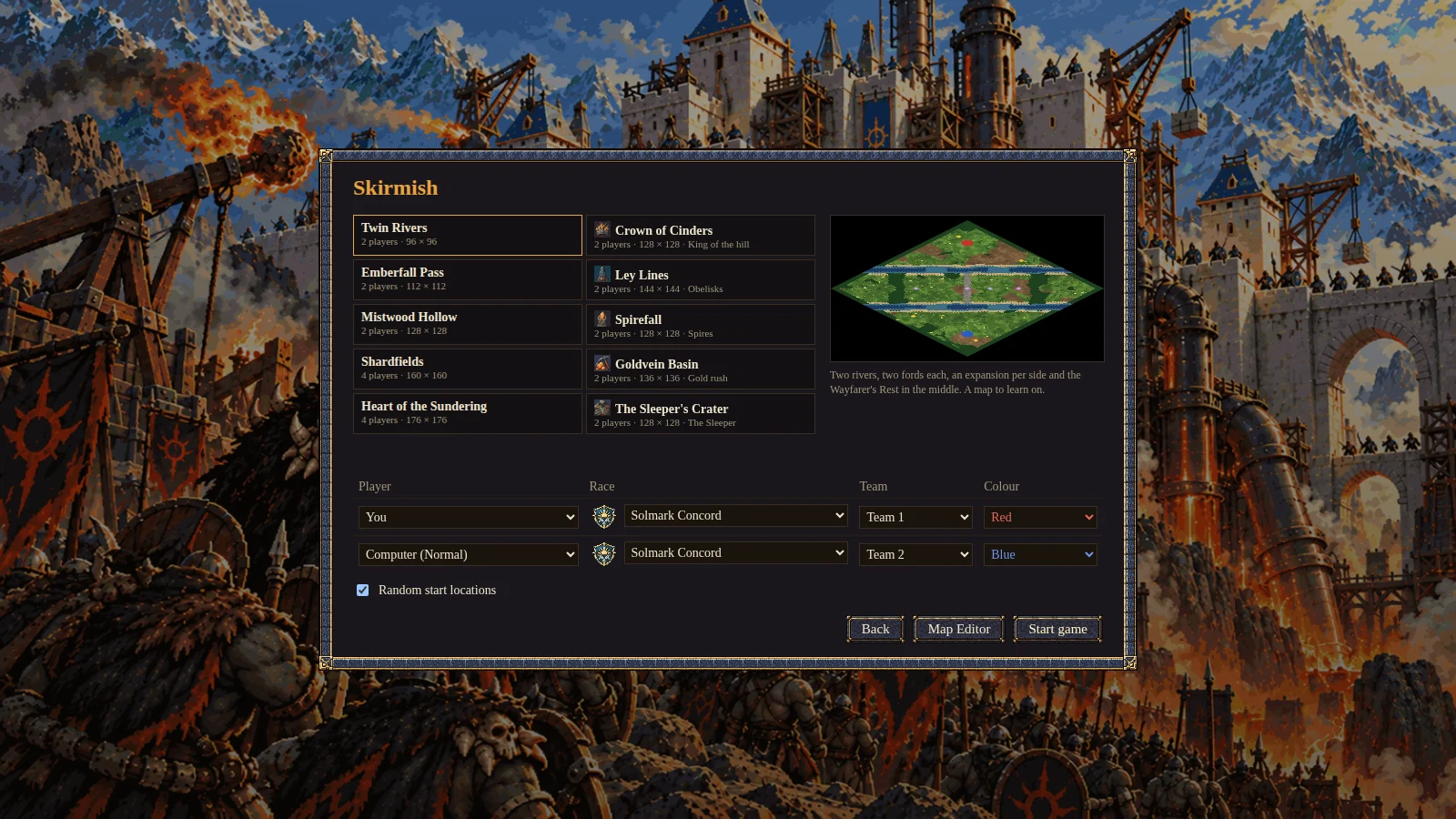
- skirmish against the computer on ten maps, some with their own goals – a hill, obelisks, a gold rush or a boss that wakes up
- multiplayer over the network, replays and a map editor
- an iPad version, so far run in the simulator while waiting for a developer account
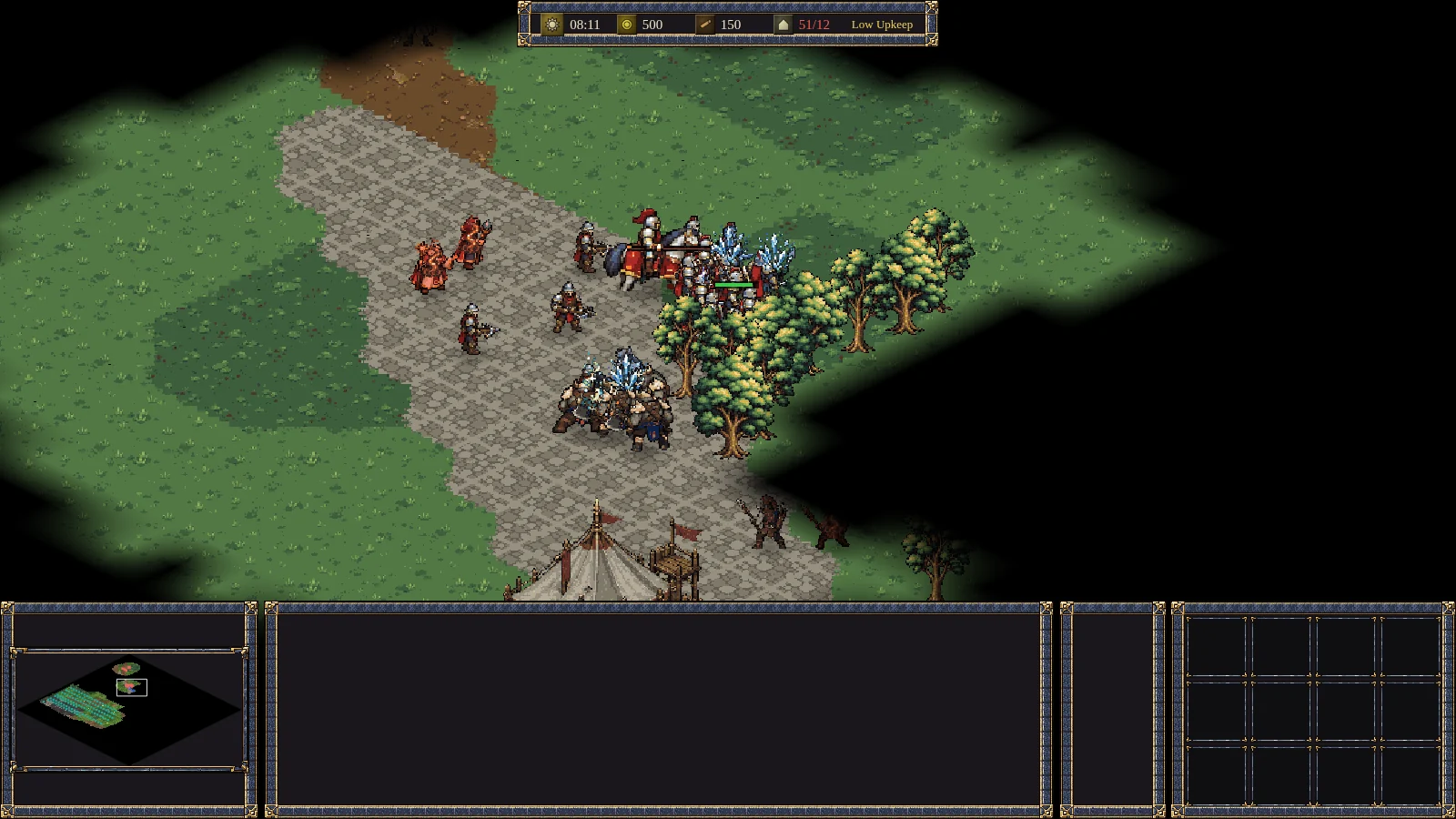
The features are done. What remains is testing and balancing.
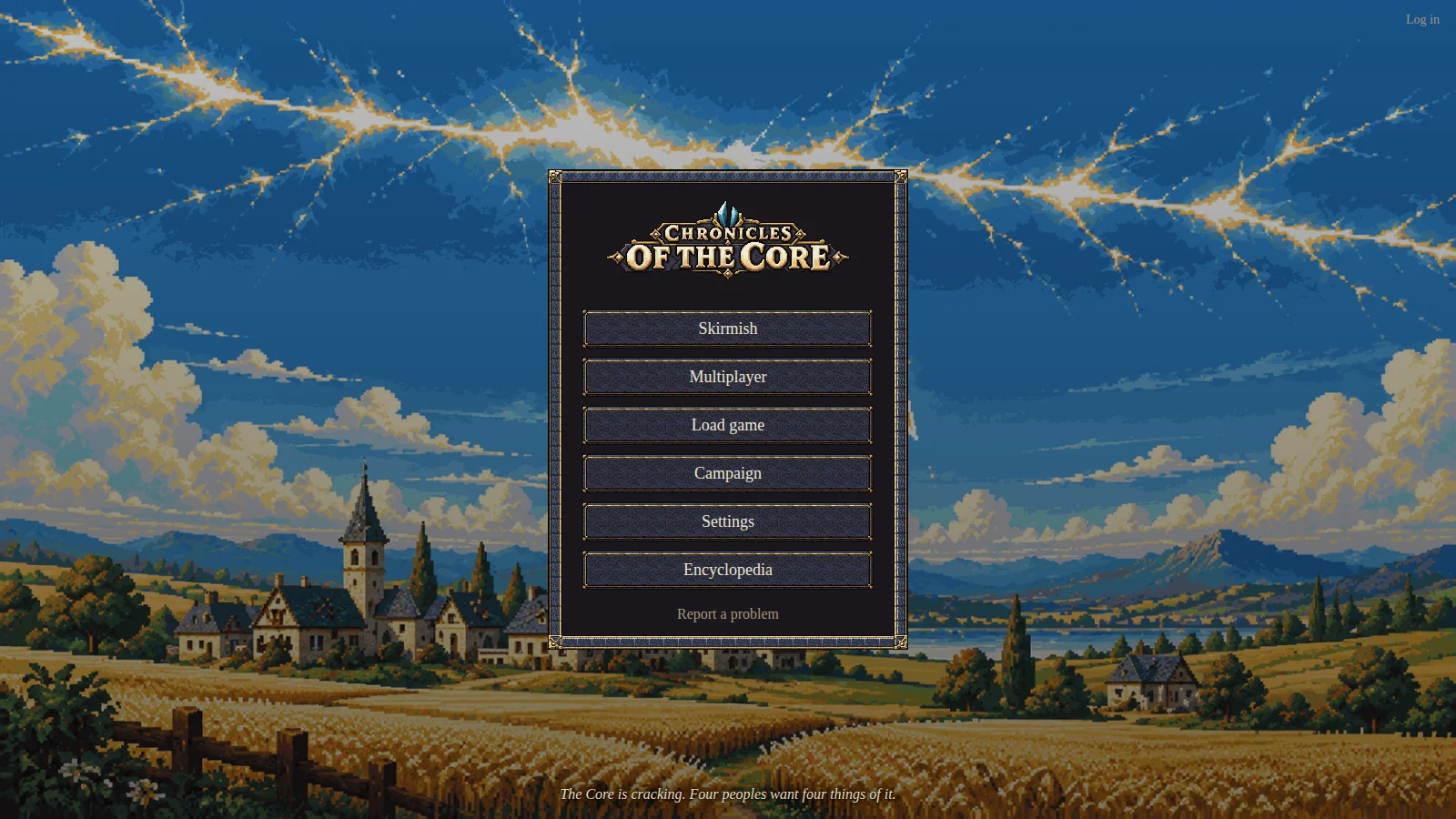
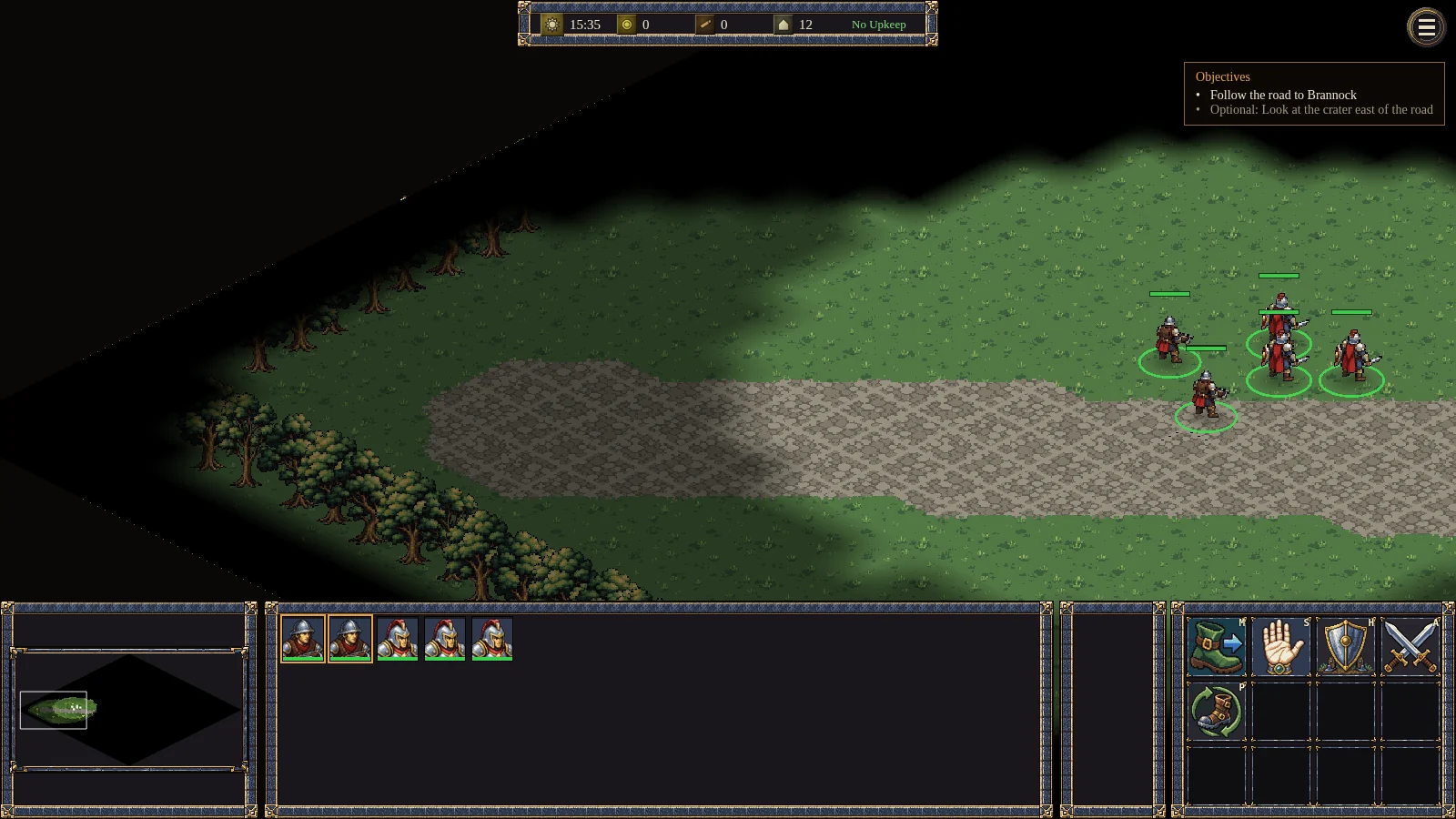
More pictures of the interface and the start of the campaign:
Three agents and a human
The game was built by me together with three AI services, each with its own role:
- Claude Code writes the code, the tests and the documents, in TypeScript with React and PixiJS and a small PHP server for accounts and saved games. It also orders graphics and sound from the others.
- Codex draws the graphics in pixel style: units, buildings, portraits, icons and the story's images. At first I passed the orders on by hand from the ChatGPT app. Then we hooked up the Codex command line, so Claude can order directly.
- ElevenLabs makes the voices, the narrator, sound effects, ambient sound and music. Every people and every important character has a voice of its own.
- I decide what the game should be, playtest it and judge whether something looks good and feels fun. No image counts as approved automatically.
The agents work through contracts instead of reading each other's code. For the graphics there's a manifest and a style guide with cell size, anchor points, frames, palette and light direction, and a script tests every delivery against them. For the sound, a script reads the game's own data and writes a manifest of around 1,300 clips – id, text and voice. A test makes sure every story page has a recording with the right text. Before the sounds go into the game, Claude builds a listening page where I hear them through and choose.
The work was run from an issue board, as in my other projects. A card isn't done until the build passes, Claude has tried the feature in a real browser with a clean console, and the measurement is in the card. What can only be felt – game feel and looks – becomes a card for me to playtest.
Along the way
The same match in every browser. For multiplayer to work, only the players' orders are sent over the network, and every computer works out the same course of events. That requires the simulation to give exactly the same result everywhere. But browsers don't compute Math.sin or Math.pow exactly the same. Now a lint rule stops such functions in the simulation, replacements of our own use only the four basic operations and the square root, and a test runs the same matches in Chromium, Firefox and WebKit and compares a checksum for every game minute.
Workers that searched the whole map. A worker could be sent to a tree behind a cliff or in the middle of the forest, and then searched for a path again and again. Now the ground is split into connected regions, and workers only pick trees in their own.
Reports that can be played back. Players can send a report about a problem straight from the game, with the running match as a replay. Since the simulation is deterministic, Claude can play the replay up to exactly the same moment and compare the checksum. Claude reaches the reports through an MCP server of its own.
The frame rate can't be measured in the tests. The browser in the tests renders in software, so its numbers say nothing about real hardware. I measure the frame rate myself.
Try it yourself
Under Files you'll find IDEA.md: a description of the game and everything I learned during the build, written as a brief. Give it in full to Claude Code and you have the groundwork for a strategy game of your own in the browser – the stack, the way of working with several agents, the decisions that turned out to matter, the pitfalls above written as rules, and a ready-made prompt to start from.