 IronfangArcade platformer in the browser with eight depths and eight bosses
Why an arcade game of my own?
Black Tiger was one of my favourite games at the arcade. I wanted to make one of my own in the same spirit.
Ironfang
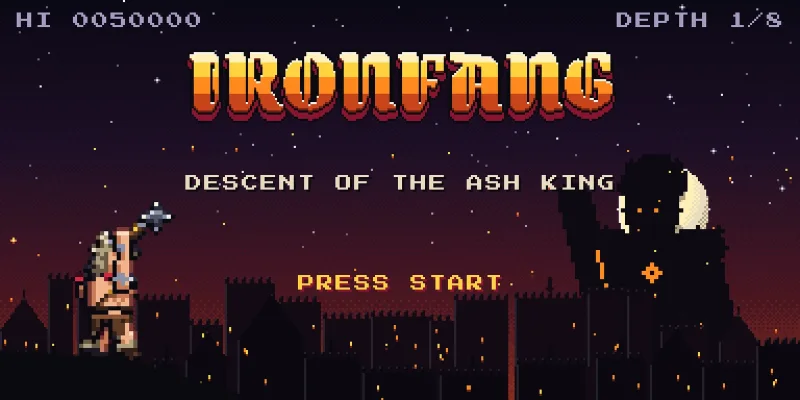
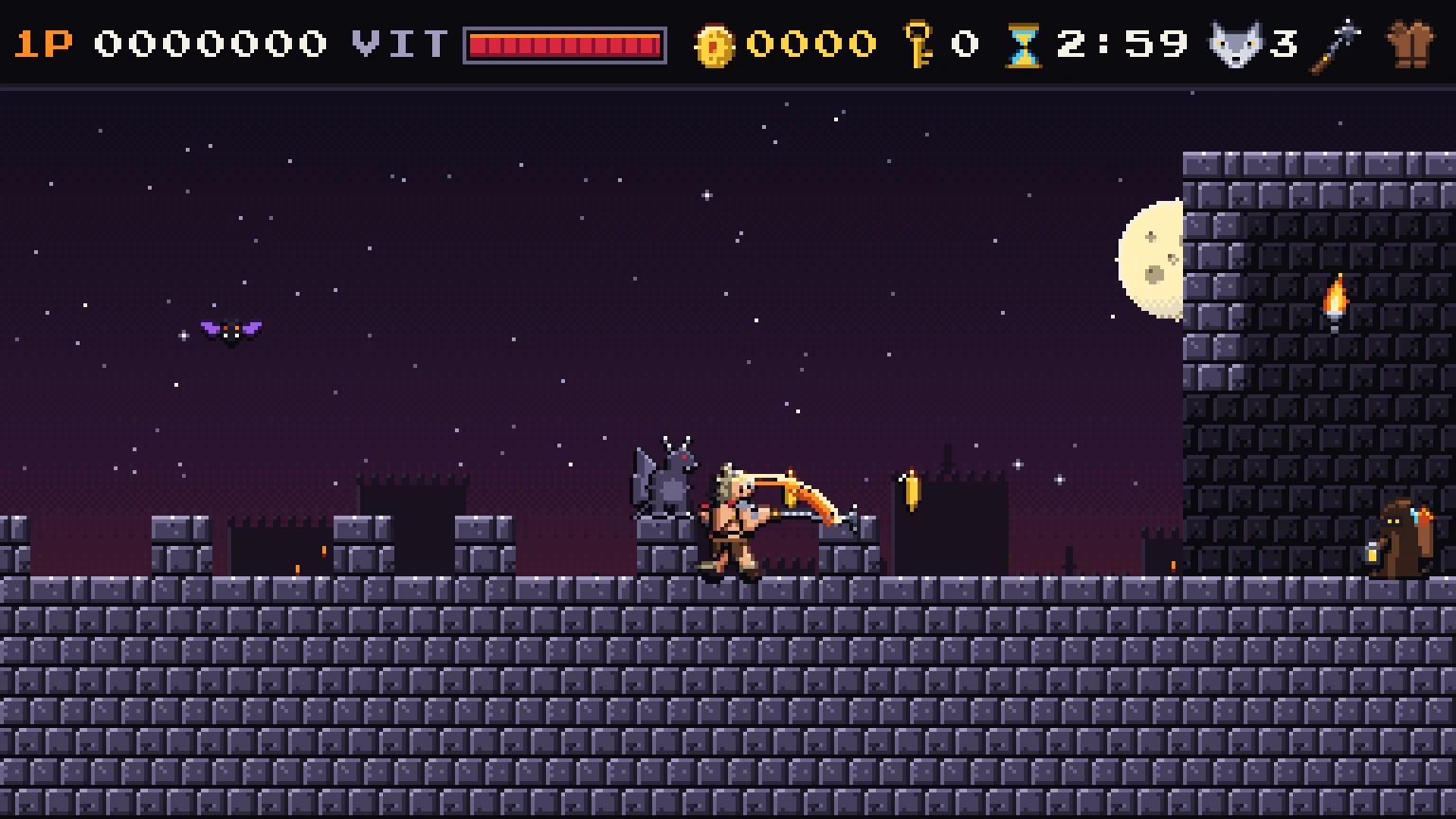
Ironfang – Descent of the Ash King – is an action platformer in the browser, with Capcom's Black Tiger from 1987 as the model for the mechanics. All the graphics, all the names and all the text are new. The hero Brann makes his way down through eight depths, with a chain flail and throwing knives, and faces a boss at the bottom of each one.
Along the way there are pilgrims to free, secrets behind cracked walls, chests that need keys and a shop where embers are traded for better armour and flail – and the hero's look changes with every purchase. Each depth has a time limit, and the score goes on a shared high score table.
What the game has:
- eight depths with their own themes – from The Ashen Gate and Rootdeep Caverns to The Molten Forge, The Frozen Vault and The Ash Throne – and a boss in each
- nine kinds of enemies, pilgrims, secrets, chests and a shop
- eleven music tracks and 26 sound effects, all synthesised in the browser in chiptune style, with no sound files
- keyboard, gamepad and touch, with rebindable keys
- an installable web app that can be played offline after the first visit
- a shared high score table on the server, and a local table when the server can't be reached
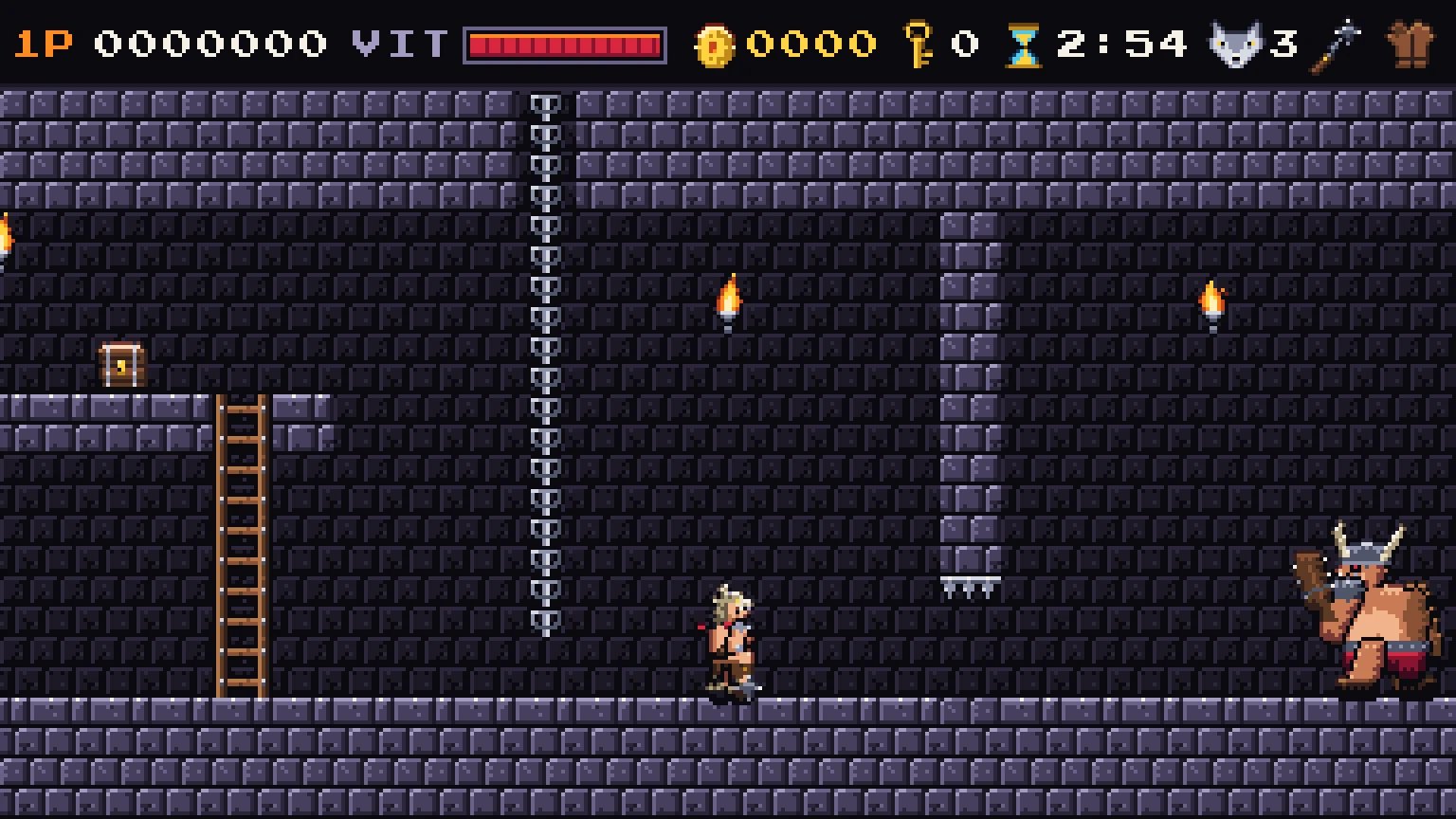
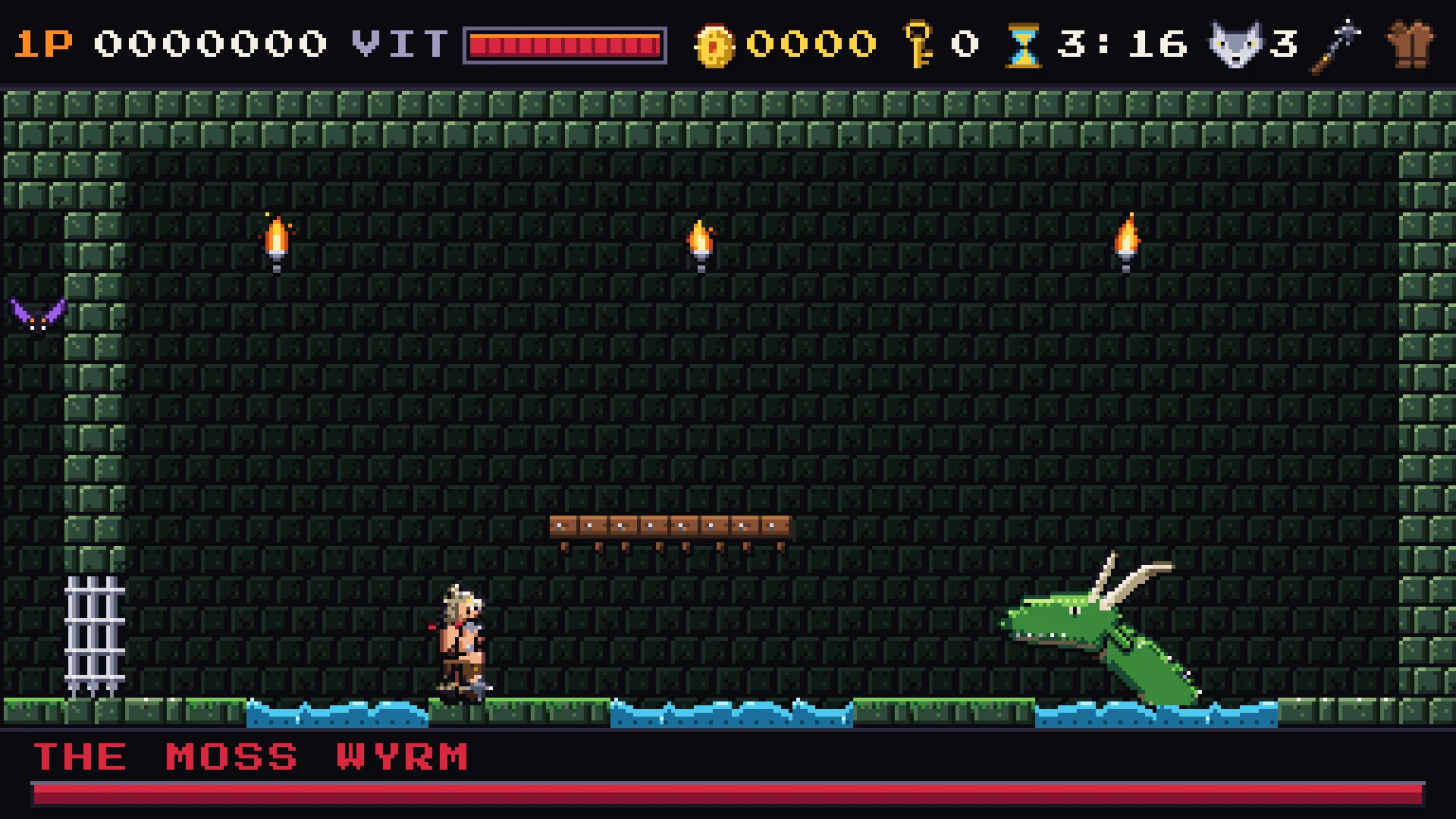
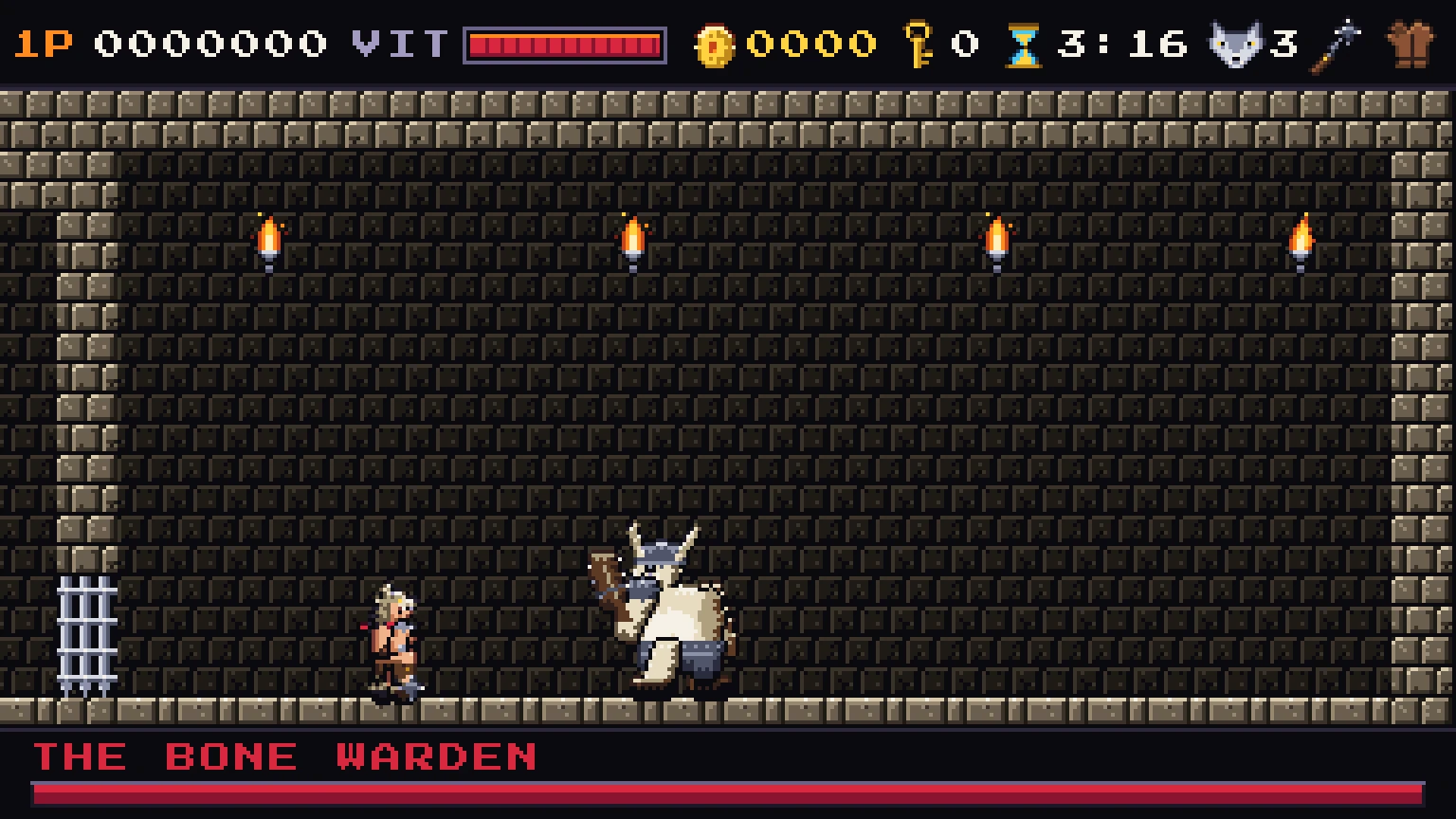
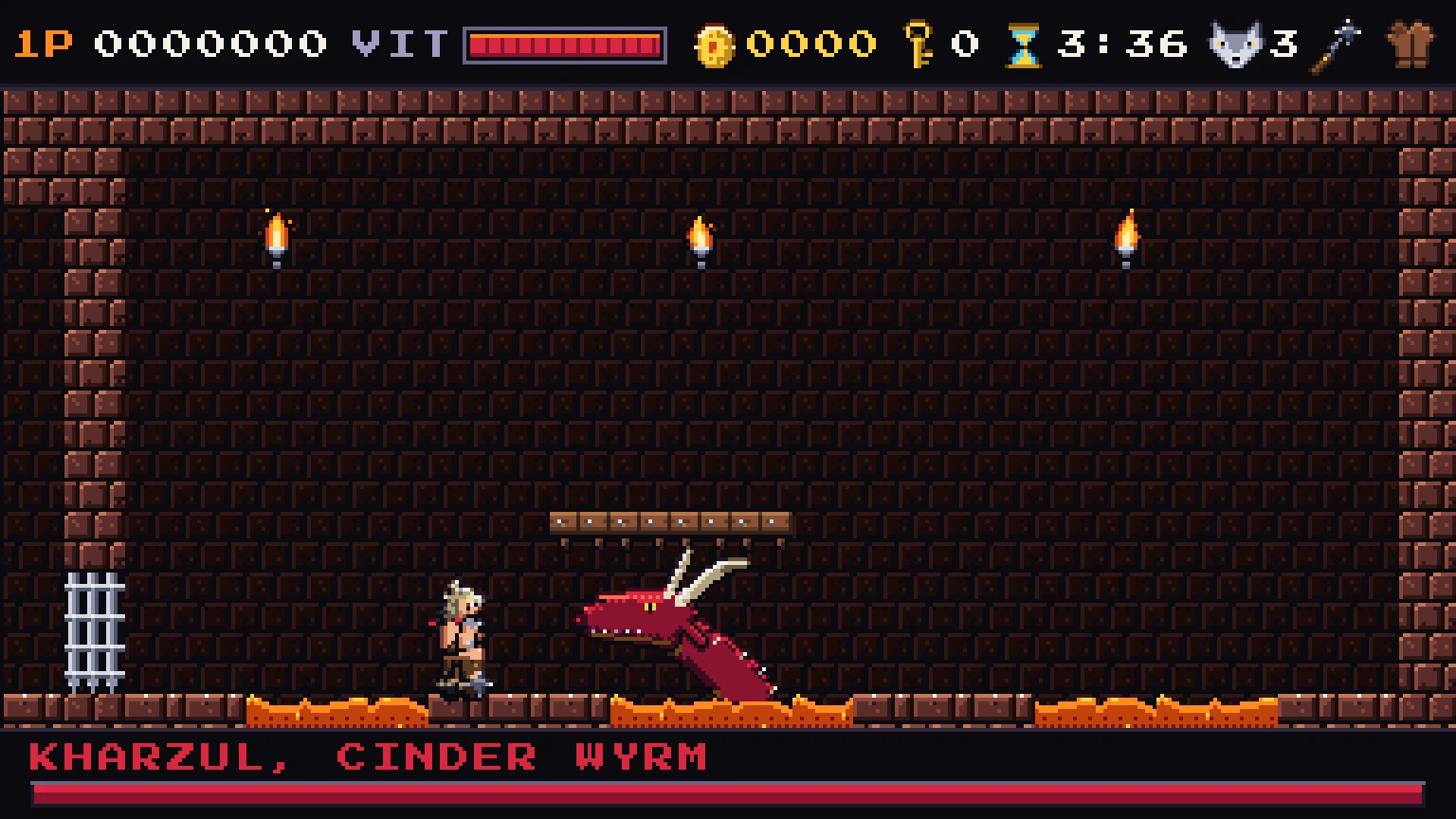
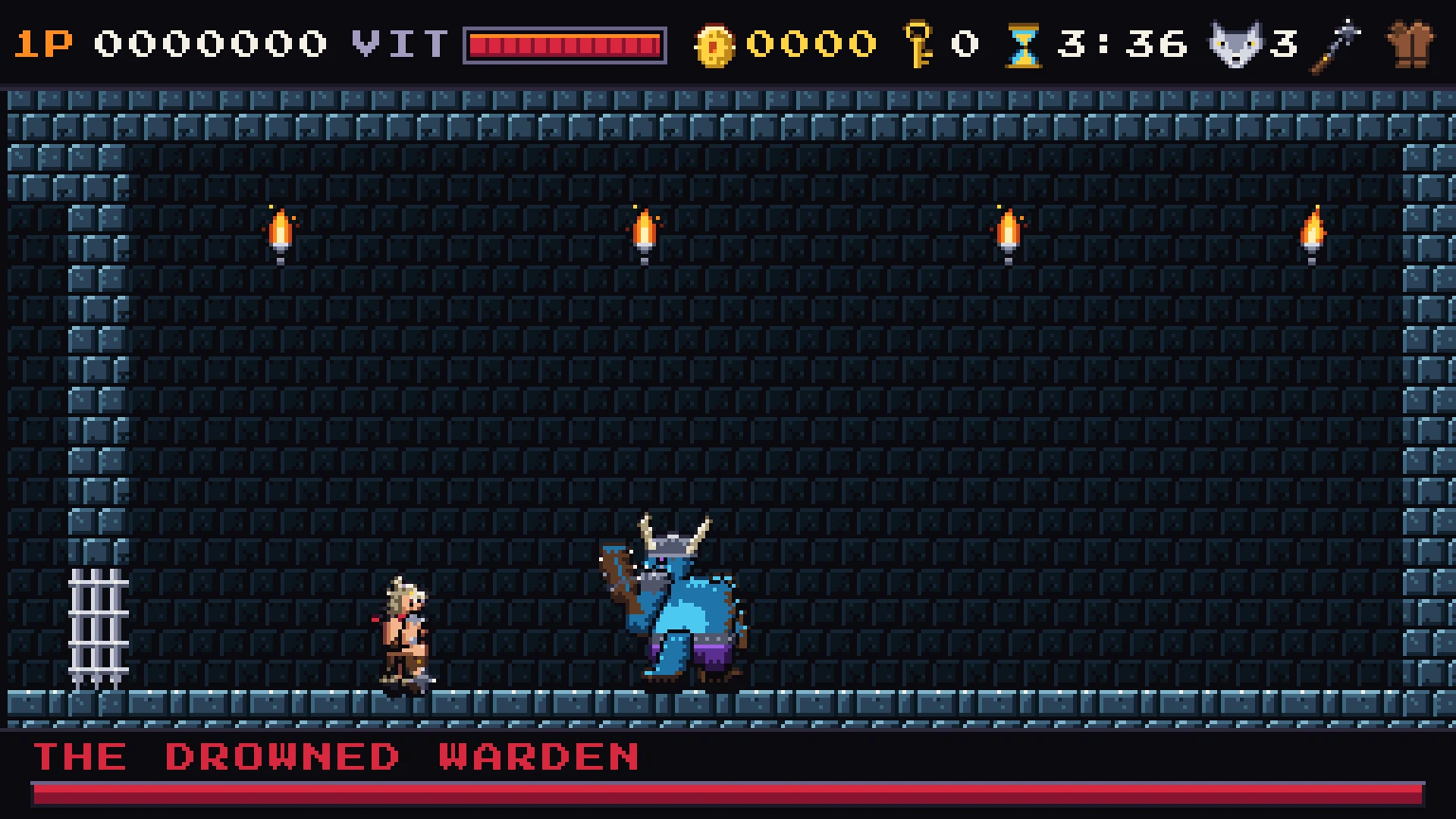
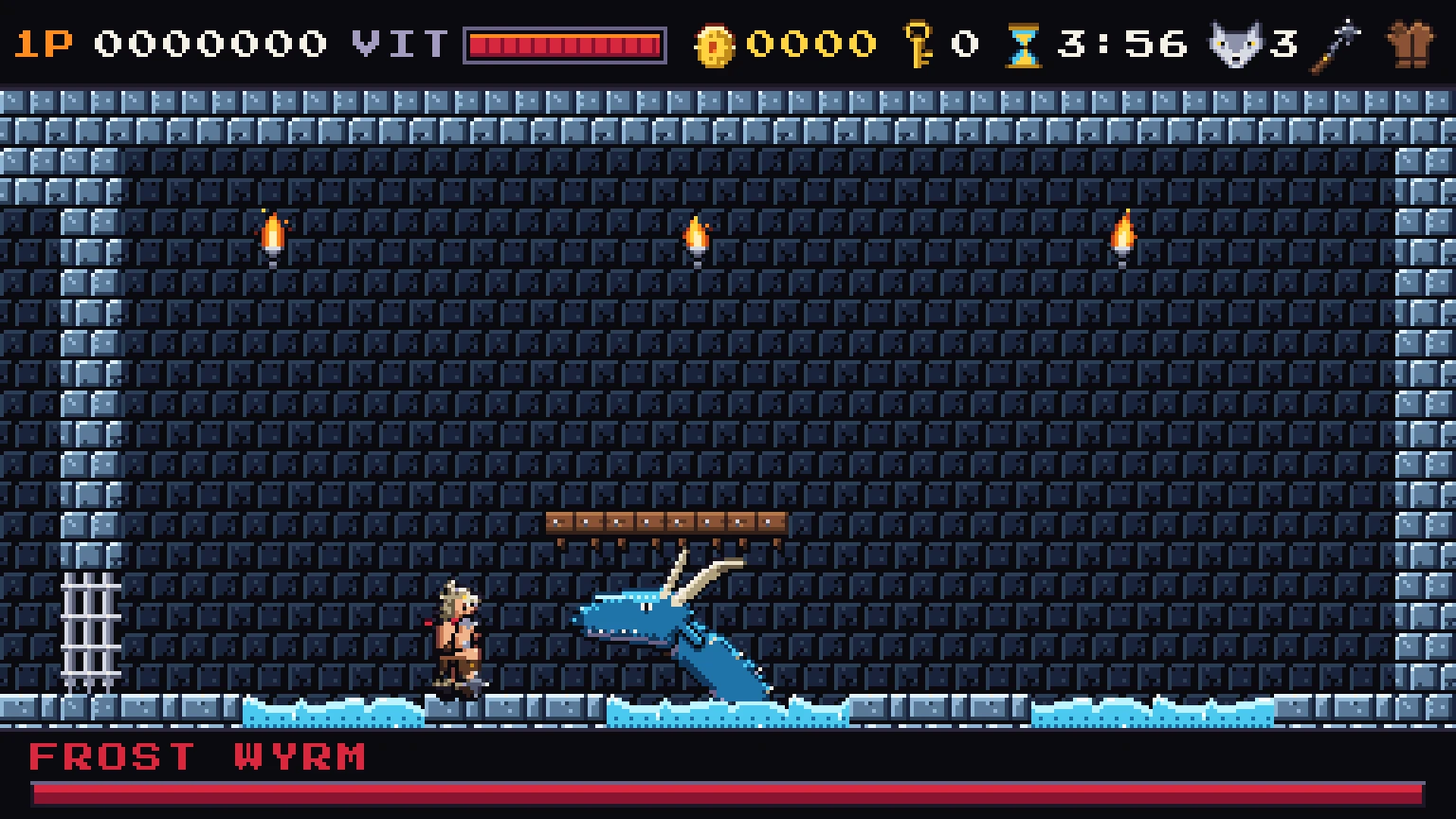
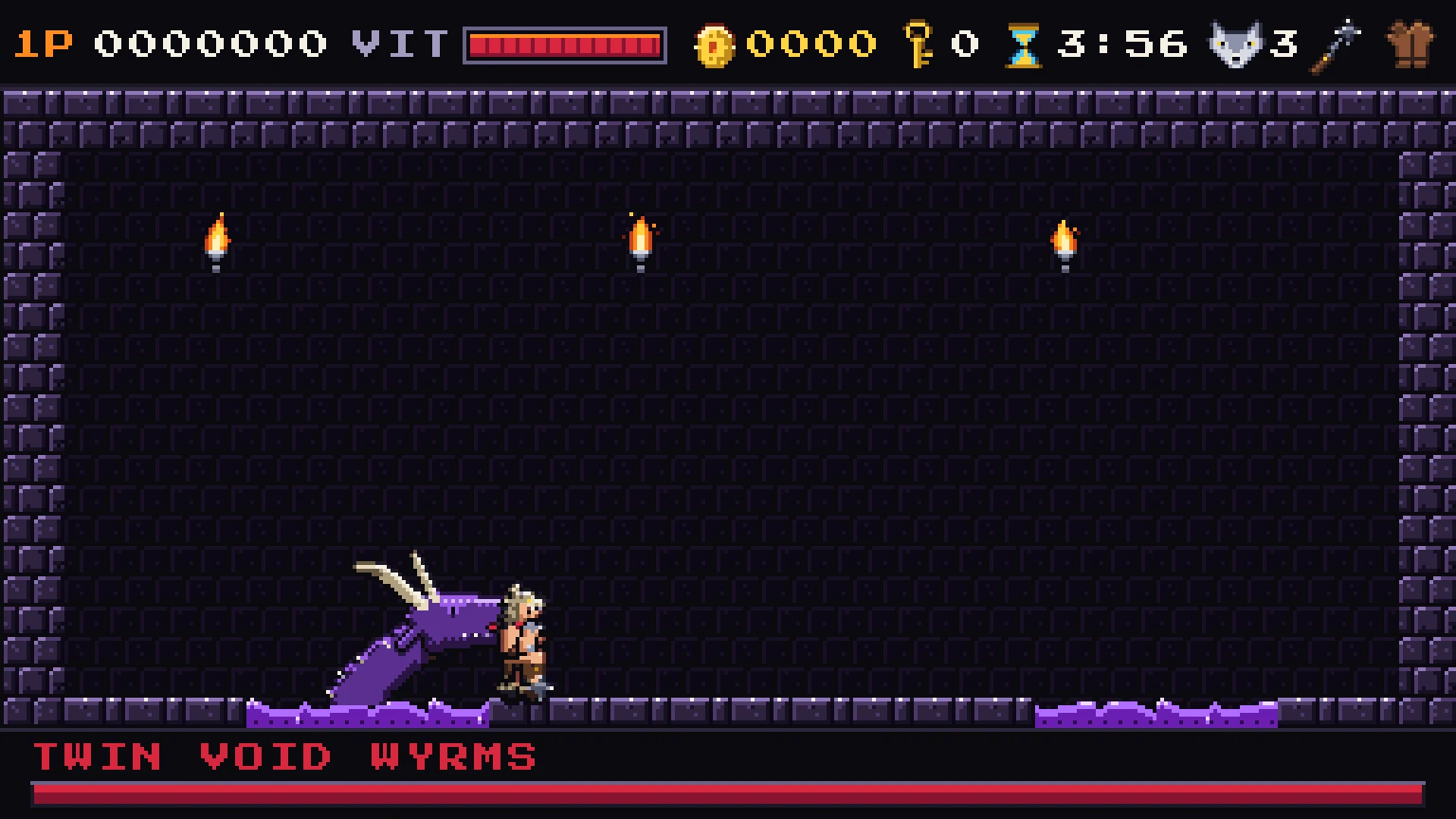
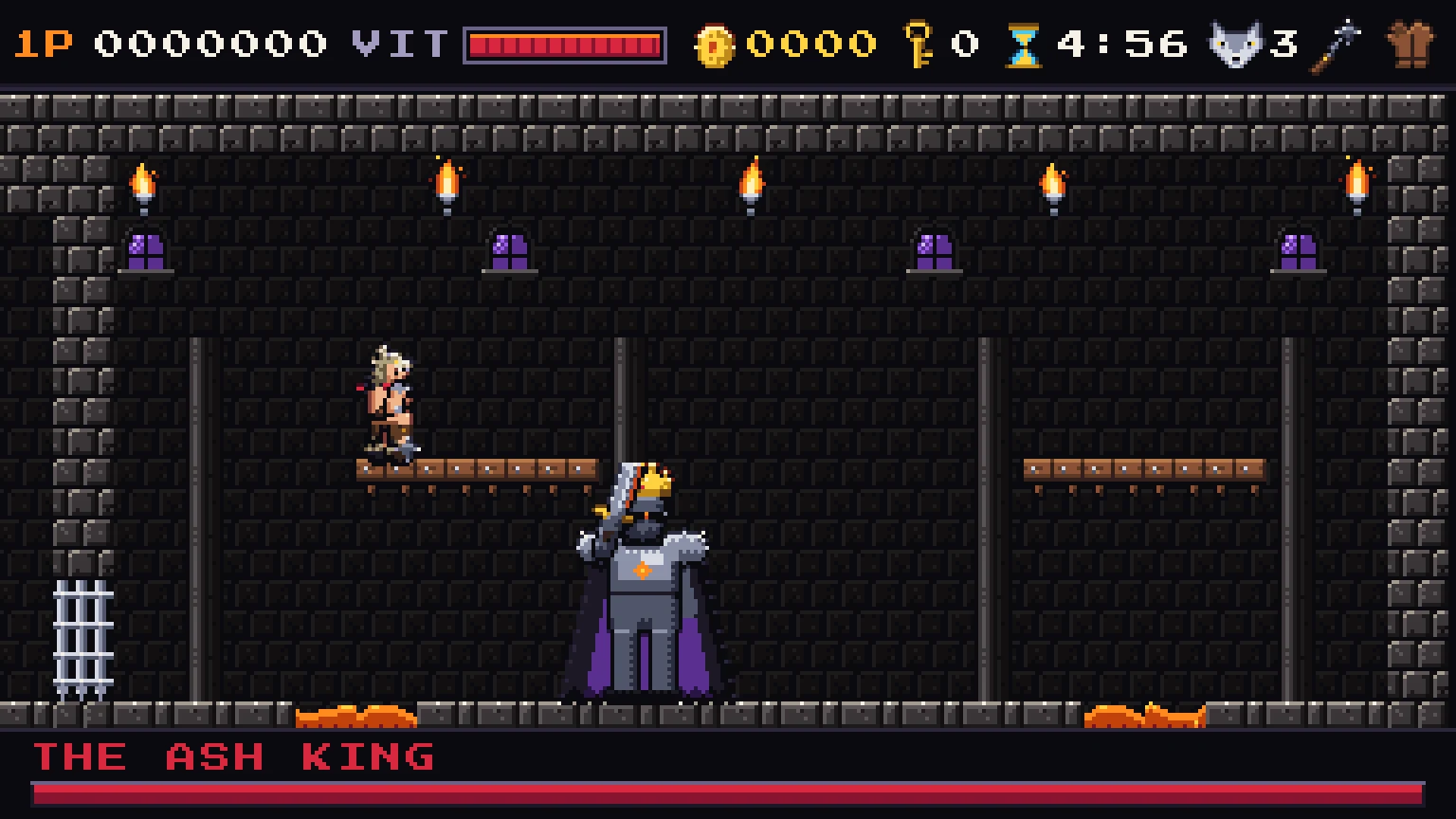
A boss from every depth:
How it was made
It all started in Claude Design: a design package with an art bible, characters, levels, screens and a handoff to Claude Code describing the game in detail. The graphics are code – characters, tiles and scenes are drawn by the design package's own scripts – so the game has no image files, and all twelve combinations of armour and flail and all eight themes come for free. Later a refined version of the design arrived, and it could be copied straight in because every character had the same size and anchor points as before.
Claude Code built the game in TypeScript and Vite on a plain canvas of 384 × 216 pixels, with no game engine. The first depth is the design's hand-drawn map. The other seven are built from the design's flows – one room per cell, with templates for each room type – and nothing is randomised, so the same depth is the same map for everyone on the high score table. Codex drew the icon: four proposals, and I picked the wolf's head.
Two tests hold the game together. One works out, with the hero's real jumping and climbing limits, that every room, pilgrim and chest can be reached on every depth. The other plays the built game in a browser and steps it exactly, one frame at a time, through every room on all eight depths and every boss.
Along the way
The boss that couldn't be hit. The boss on depth 2 couldn't be hit. Its head sat 29–51 pixels above the floor, but the hero's strike reaches 10–20 and the knife flies at about 21. Only a jumping strike up close got through. The same bug was on depths 4, 6 and 7, where the wyrm is also the boss. Now it rises lower out of the pool, so its head is level with both the strike and the knife.
The water you never got out of. Anyone who fell into the water on depth 2 never got out again: the jump is lower in water, and the pools were just too deep. The test that works out what can be reached treated water as impassable and so couldn't see it. Now jumping in water works as a swim stroke.
The secrets showed. The embers behind a cracked wall showed before the wall was broken, so you could see where the secret was. They were drawn on top of the wall and got the wall's pattern as their background.
Letters that ran together. The font has only one pixel between characters, and the text read as squashed. An extra pixel between the letters fixed it.
The blur at the top on iPhone. Since iOS 26 the system puts a blur over the top edge of a web app from the home screen, and no setting turns it off. It only goes away when the top edge is covered by a fixed, opaque container – so the whole game now lives in one.
Compared with Black Tiger
Black Tiger is the original and the model for the mechanics, and it has two players taking turns, which Ironfang doesn't. What Ironfang gives me is a game of my own with its own world, playable in the browser on the computer and on the phone, even offline.
Try it yourself
The game can be played in the browser – the link is next to the project.
Under Files you'll find IDEA.md: a description of the game and everything I learned during the build, written as a brief. Give it in full to Claude Code, ideally after a design package from Claude Design, and you have the groundwork for an arcade game of your own.