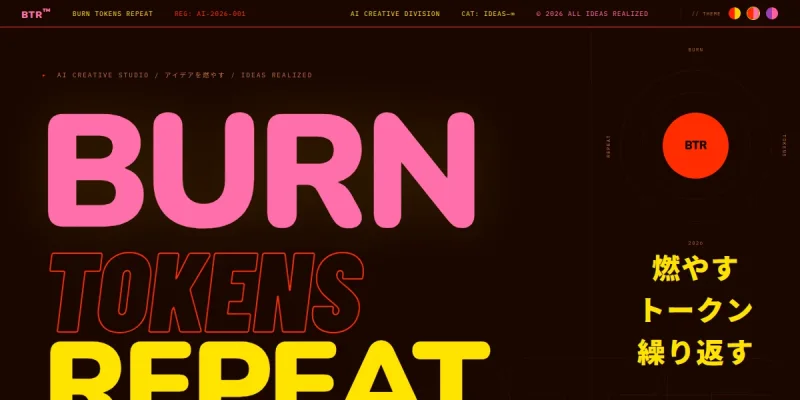
 Burn Tokens RepeatA playground for graphic design, typography and 3D in the browser
Why a playground?
Burn Tokens Repeat is my playground for design and 3D. It's where I try out graphic style, typography and 3D in the browser – without anything having to become a product.
Burn Tokens Repeat
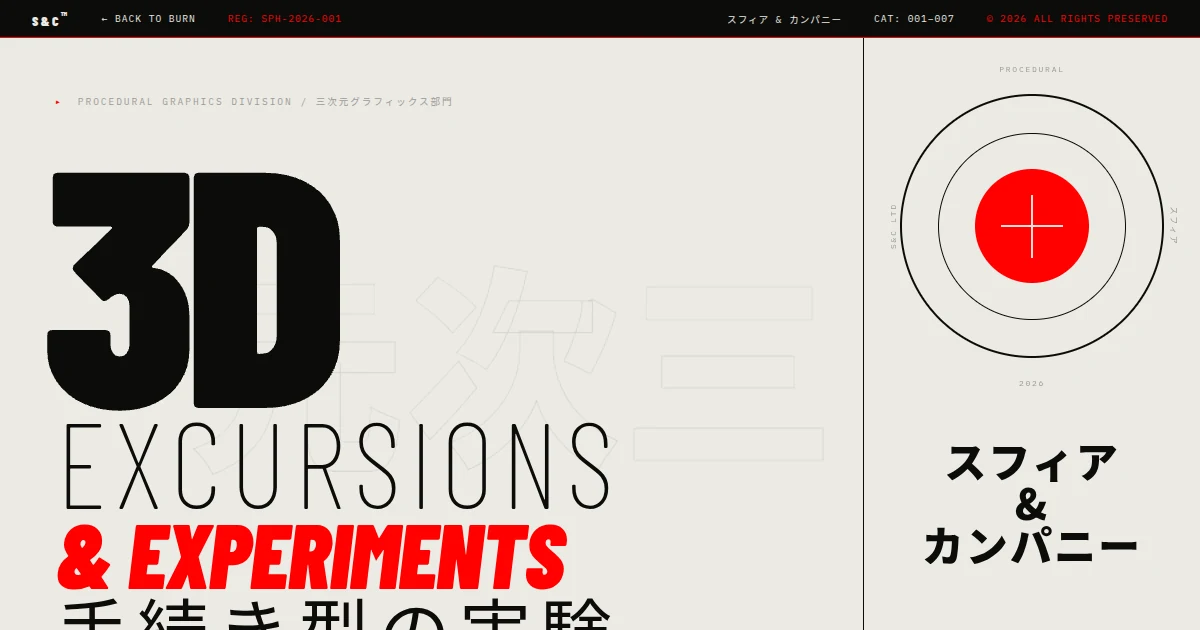
The site is a made-up creative agency in a brutalist, industrial style, with Japanese headings, reference numbers and stamps. The design is inspired by TDR – The Designers Republic. The site has three design systems of its own that the pages choose between: BTR for the home page and the experiments, S&C in paper, ink, red and yellow for the 3D department and the render archive, and Konstrukt with paper grain and stencil type.
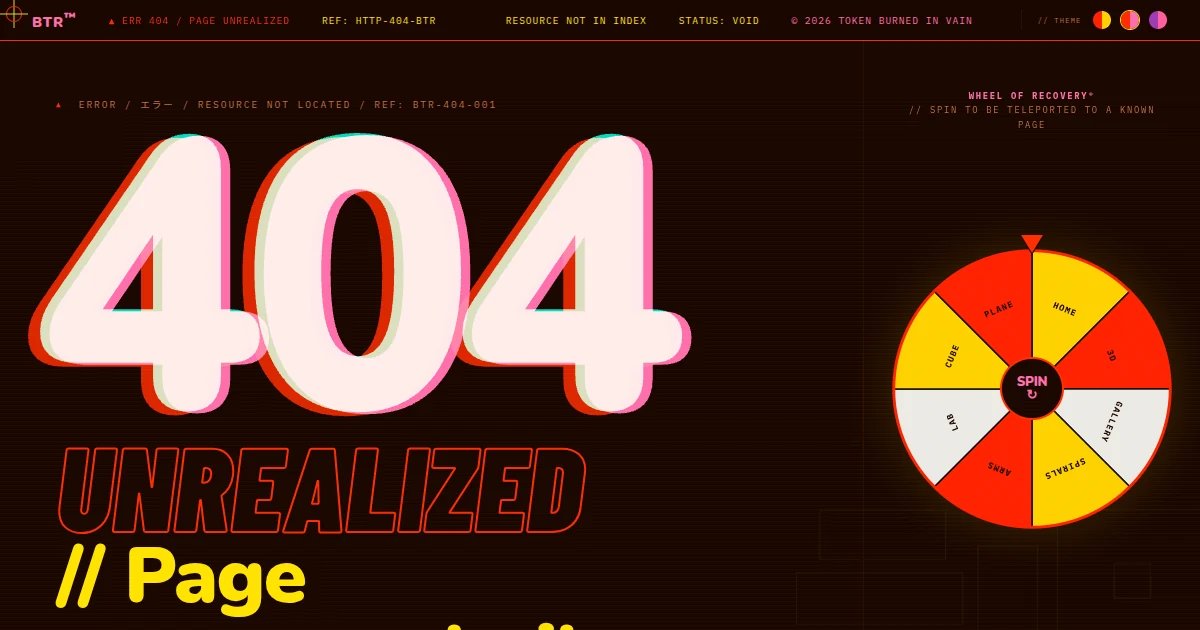
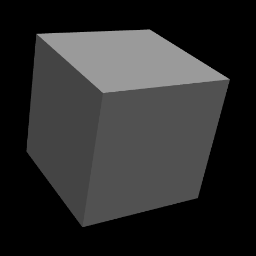
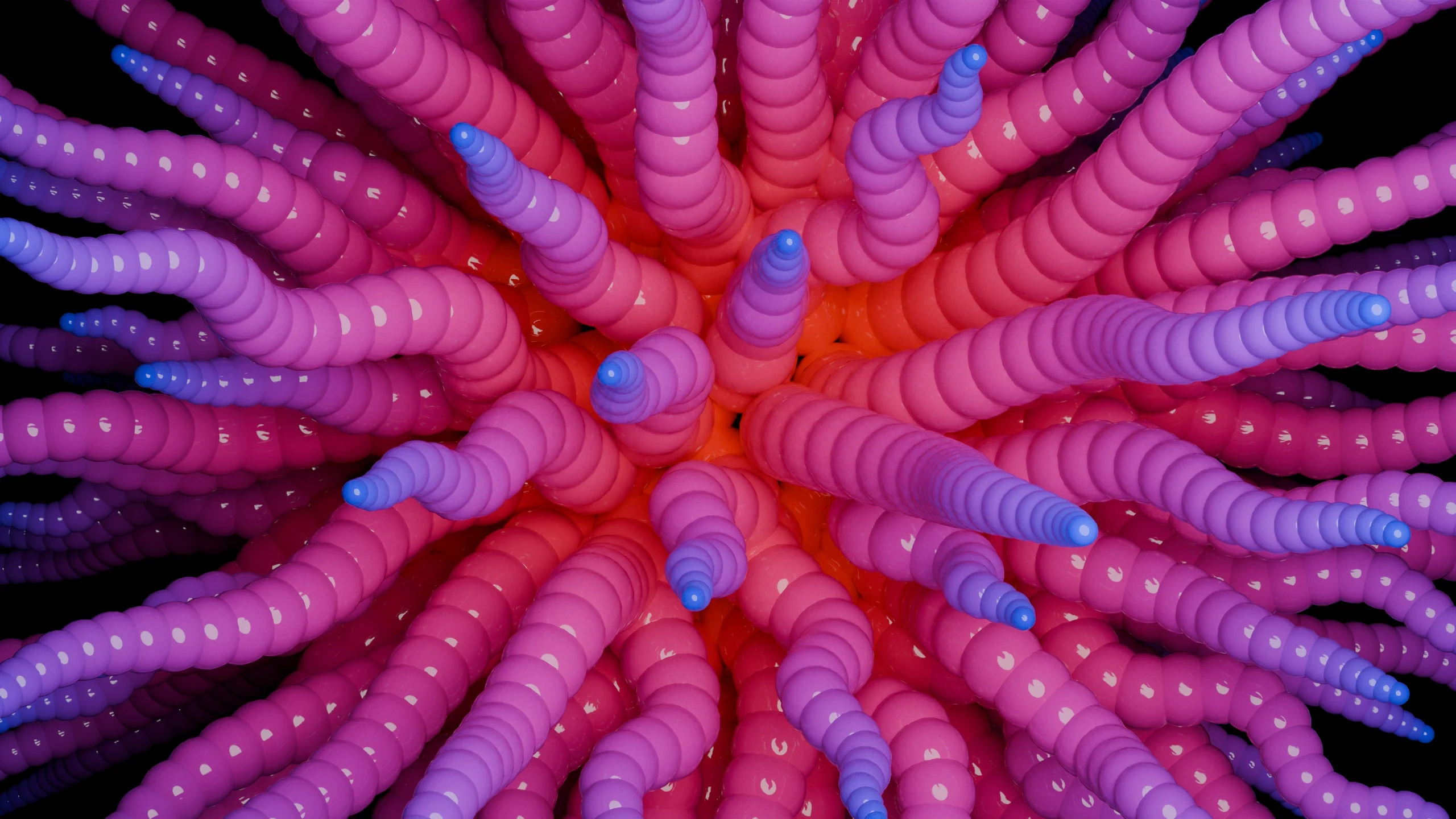
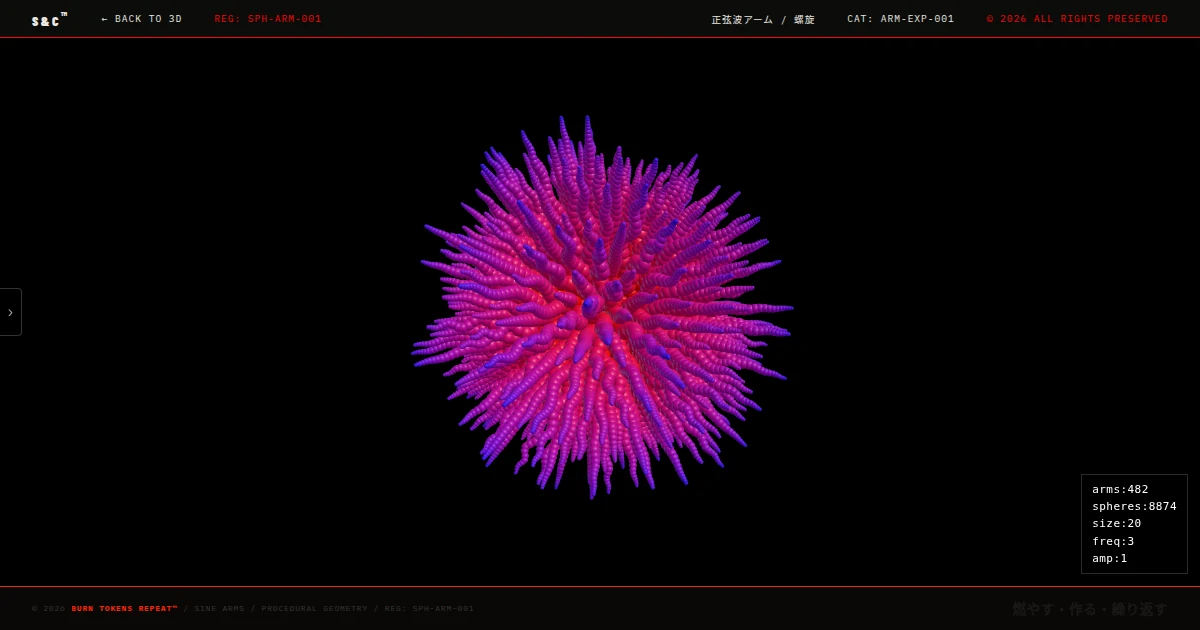
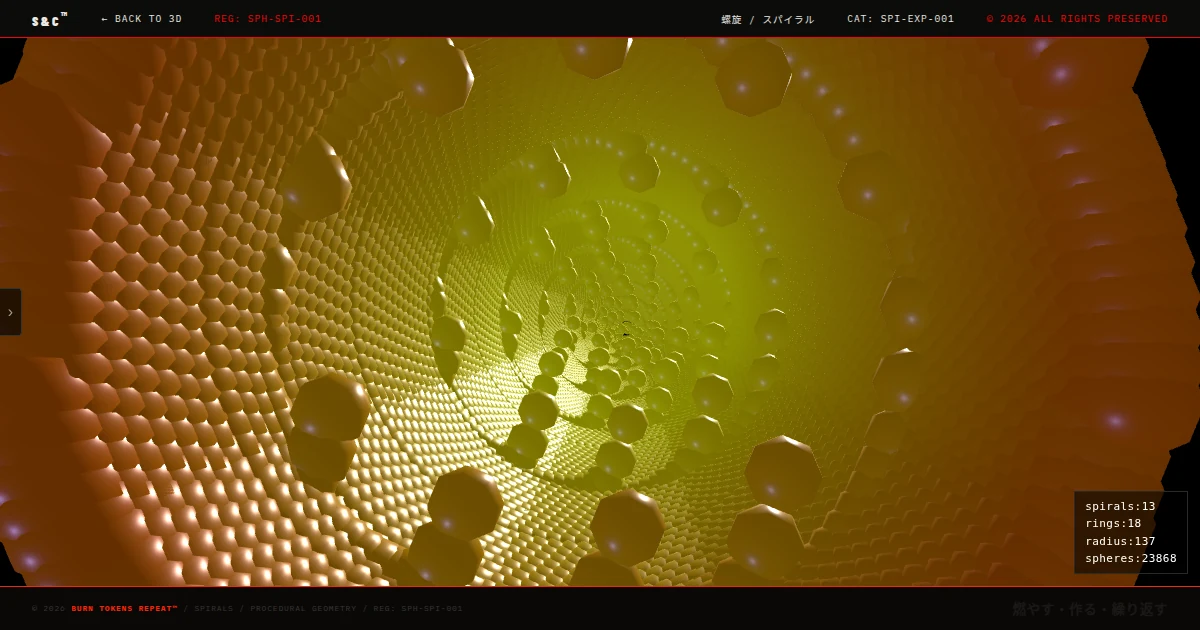
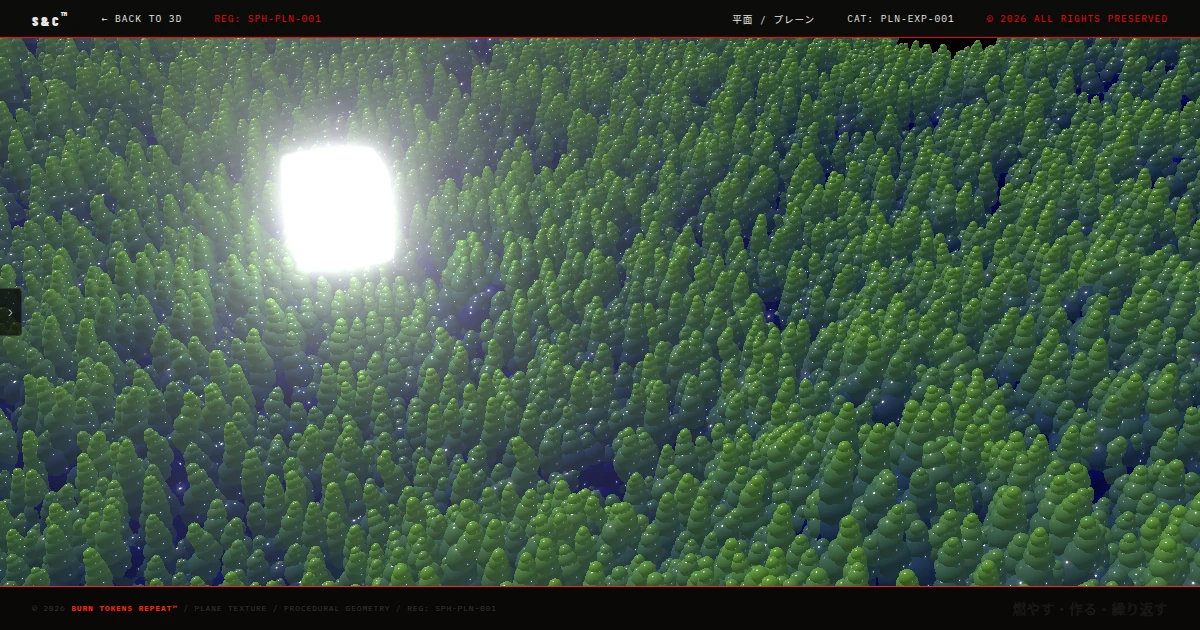
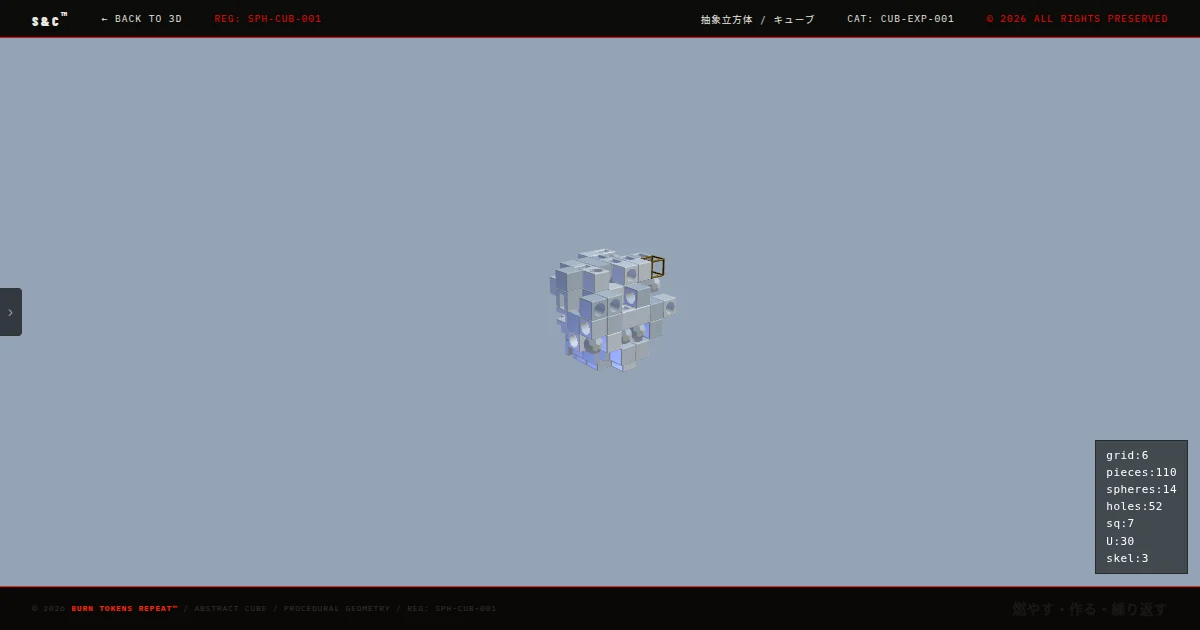
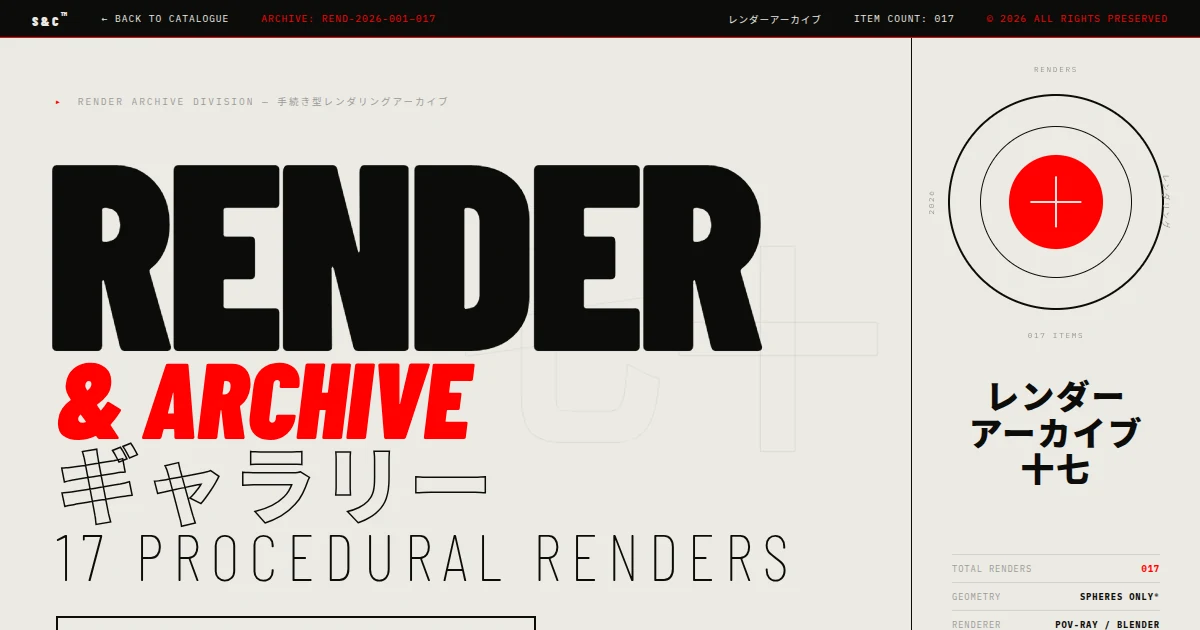
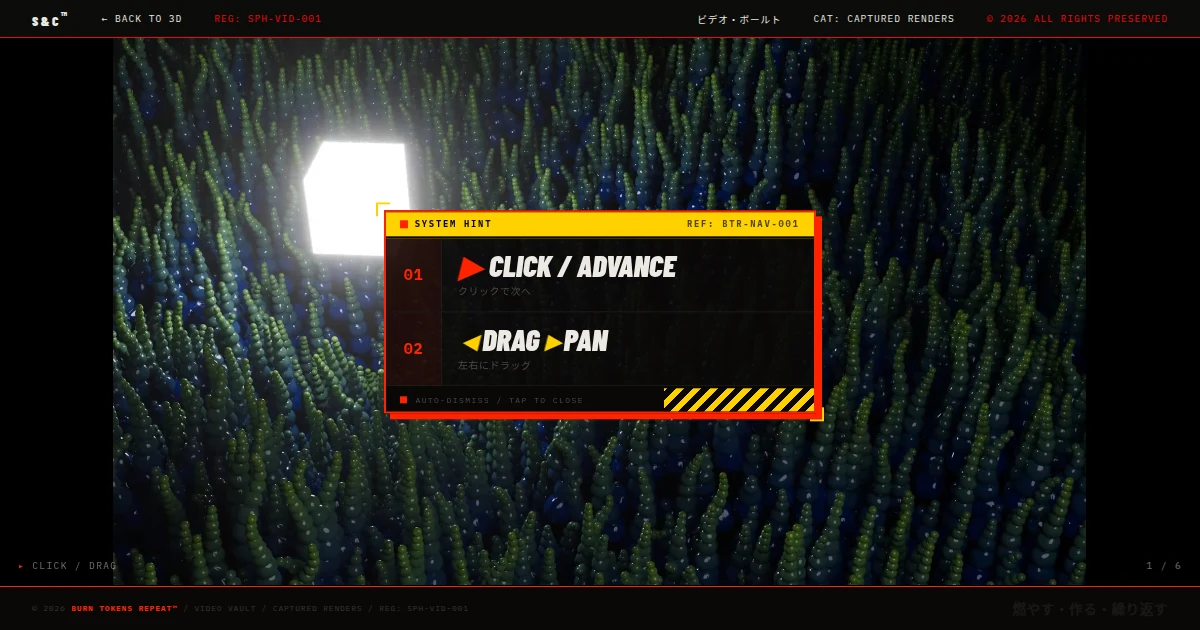
Under 3D are the experiments: arms and spirals of thousands of spheres, a field of pillars, a cube of pieces, a lab that loads 3D models, and an archive of renders made in POV-Ray and Blender. Most of the experiments have a panel where you can drag the parameters while the scene runs.
Several of them have a long history. Many of the sphere calculations started as a VB program in the early 2000s that generated objects for POV-Ray. Now, with the progress in AI, Claude Code could rebuild it in any language. And 3D Lab was a real lab assignment we got in the course Computer Graphics and Visualisation in 1998, written in C with IRIS GL on an SGI machine – now easily translated to JavaScript.
The site is PHP with no framework and no build step: short pages that pull in shared parts for the head and footer. The 3D experiments use three.js. The site can be installed as a web app and works offline, and a small sticker in the corner says it has zero cookies and which three things it stores in the browser – with a button that deletes them.
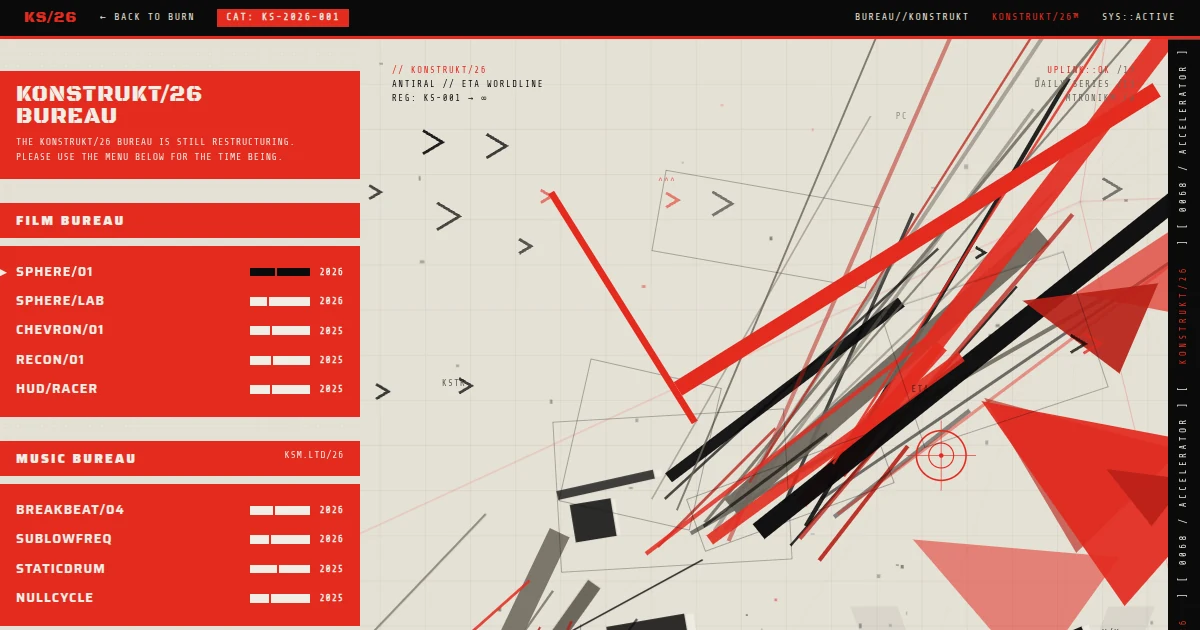
The design was made in Claude Design and built with Claude Code. Codex drew the icon: four proposals, and the arrows won.
More pages:
Along the way
Relative paths broke. The site has clean URLs without .php, so a page living in /3d/lab.php is shown as /3d/lab/. A relative path to a 3D model then pointed one directory too deep. Now every link and every fetched file is absolute.
The blur at the top on iPhone – with the opposite fix. Since iOS 26 the system puts a blur over the top edge of a web app from the home screen. In other projects it went away with a fixed, opaque container over the whole screen. Here that didn't work. Instead, the blur went away when the page stayed in normal flow with a top bar stuck to the top.
The 3D pages in the screenshots. Screenshots of every page are taken automatically in a headless browser. For the three.js pages to draw anything it runs with the GPU switched on, and the heavier scenes get more time before the picture is taken.
Only the fonts that are used. A script works out which characters the pages actually show – including in the shared parts – and removes the font subsets and files no page needs.
Compared with the alternatives
This is a playground, not a product, so there's no program to compare it with. What it gives me is a place to try ideas in style, typography and 3D right in the browser – and to see how far Claude Design and Claude Code can take them, even with code that's twenty and thirty years old.
Try it yourself
The site is on the web – the link is next to the project.
Under Files you'll find IDEA.md: a description of the site and everything I learned during the build, written as a brief. Give it in full to Claude Code and you have the groundwork for a playground of your own for design and 3D.