 ThaleonSide-scrolling arcade game in the browser with 24 rounds and six realms
Why an arcade game of my own?
Rygar was one of my favourite games at the arcade. I wanted to make one of my own in the same spirit.
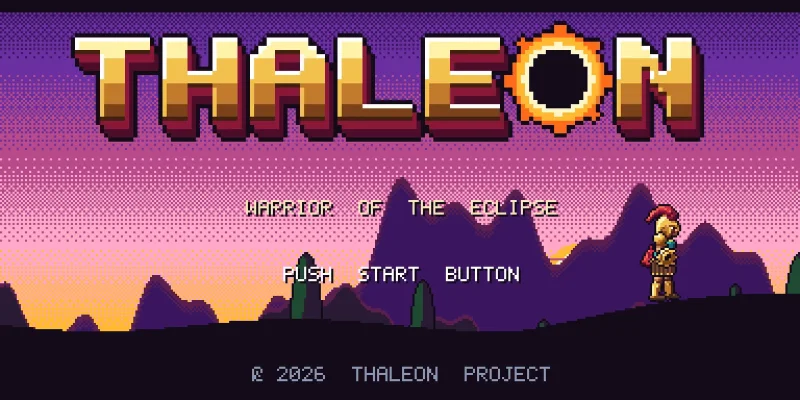
Thaleon
Thaleon – Warrior of the Eclipse – is a side-scrolling action game in the browser, with Tecmo's Rygar from 1986 as the model for the mechanics. All the graphics, names and text are original: nothing from Rygar is used except the genre and the mechanics.
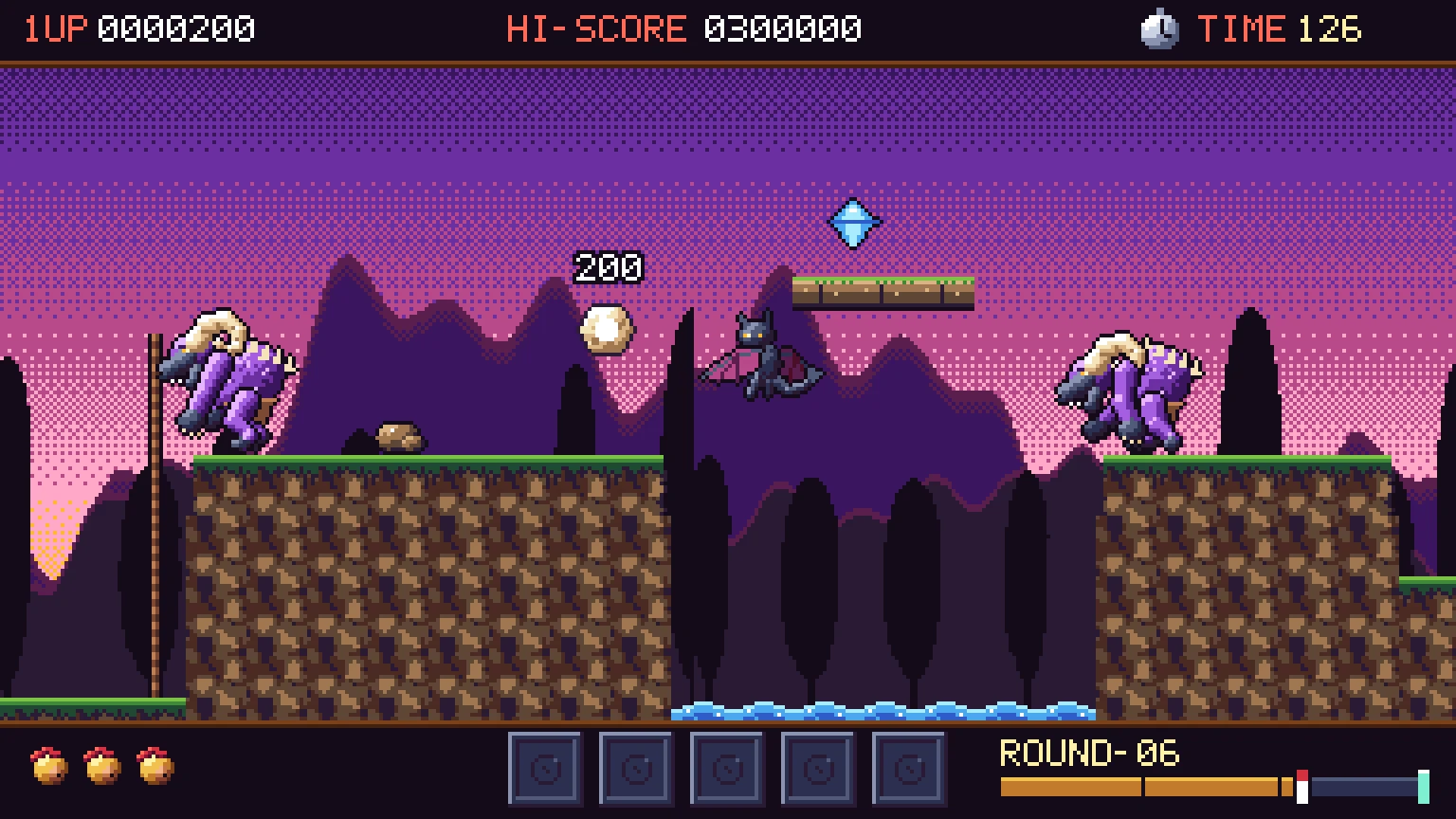
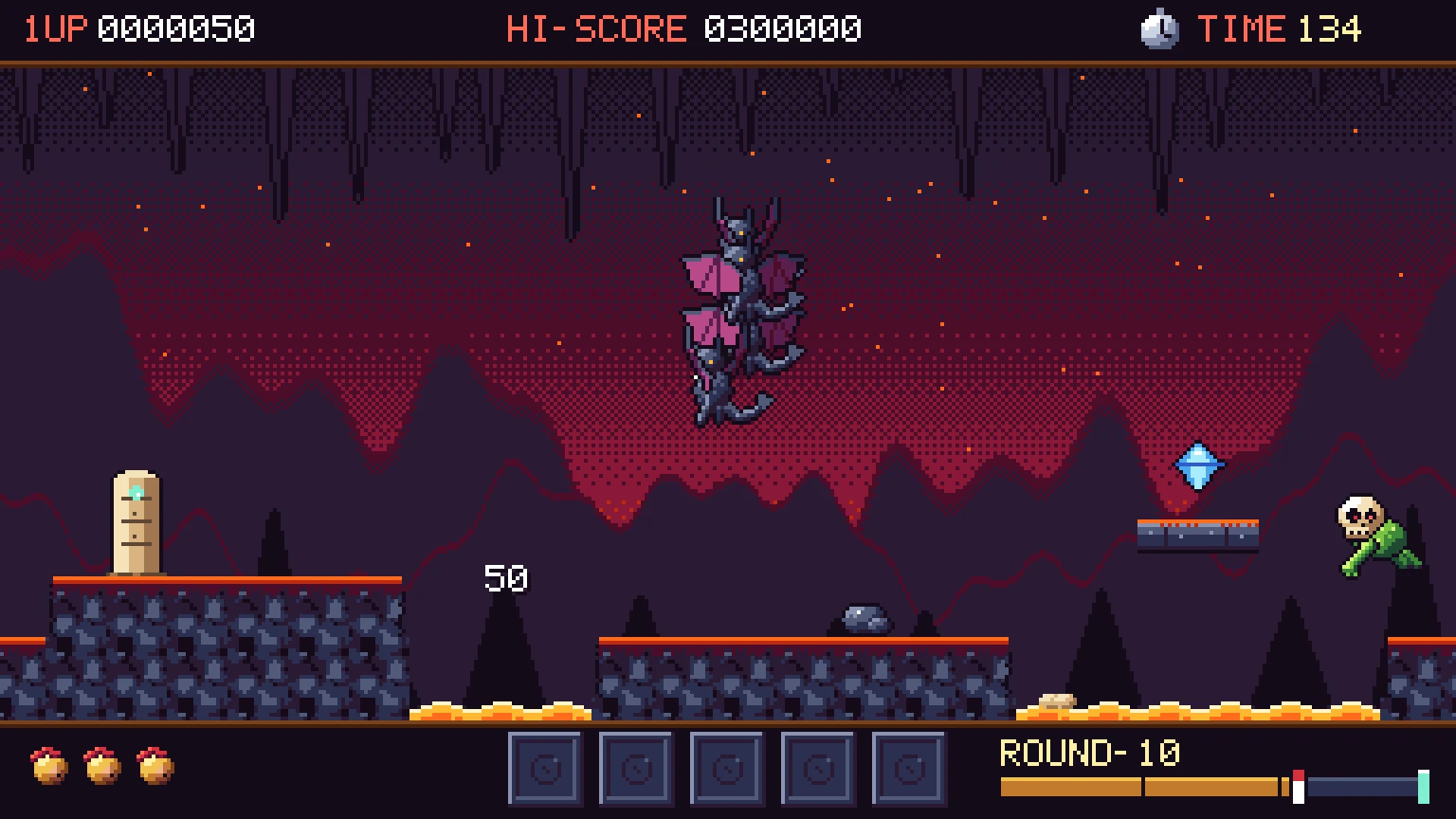
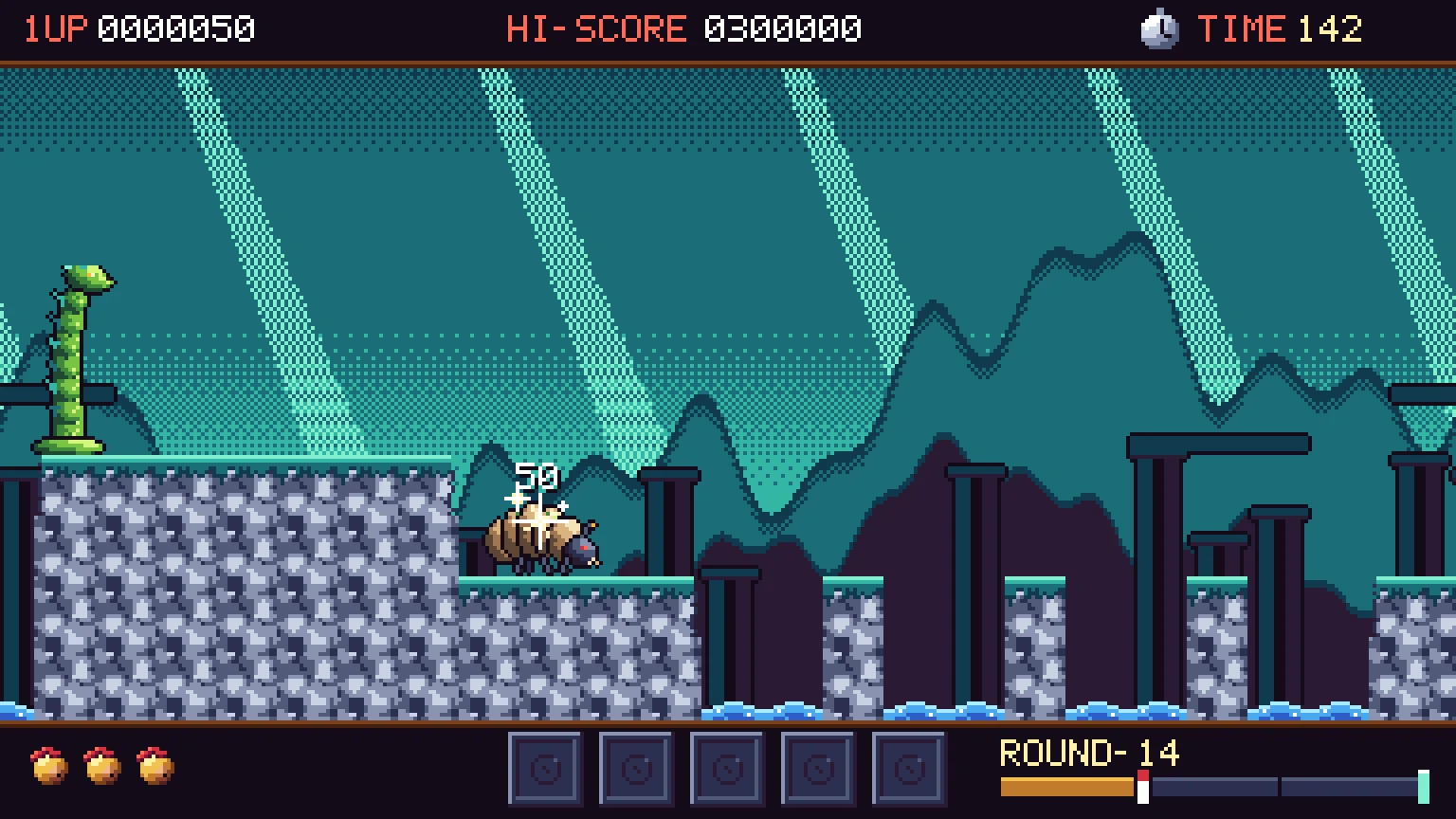
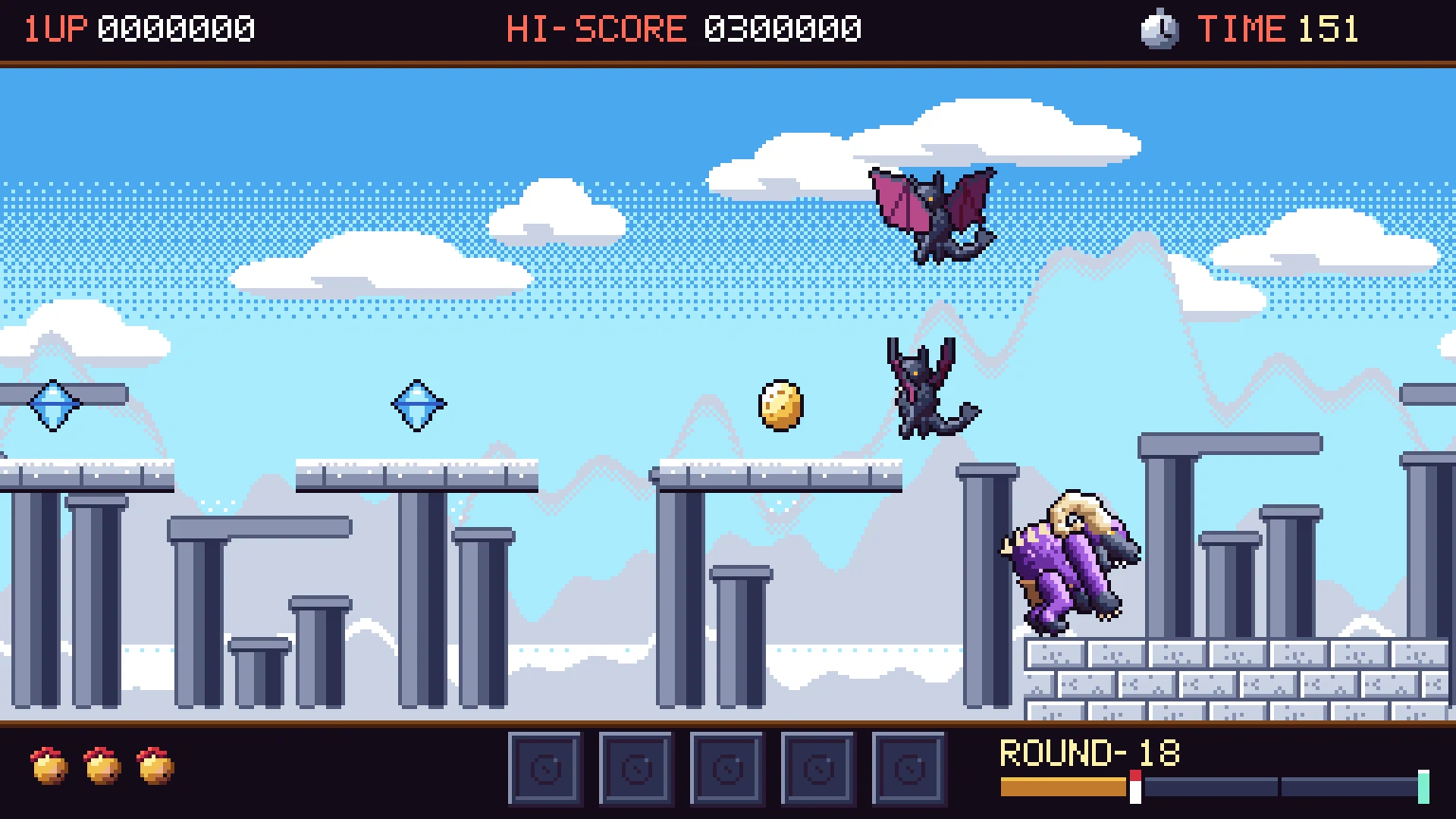
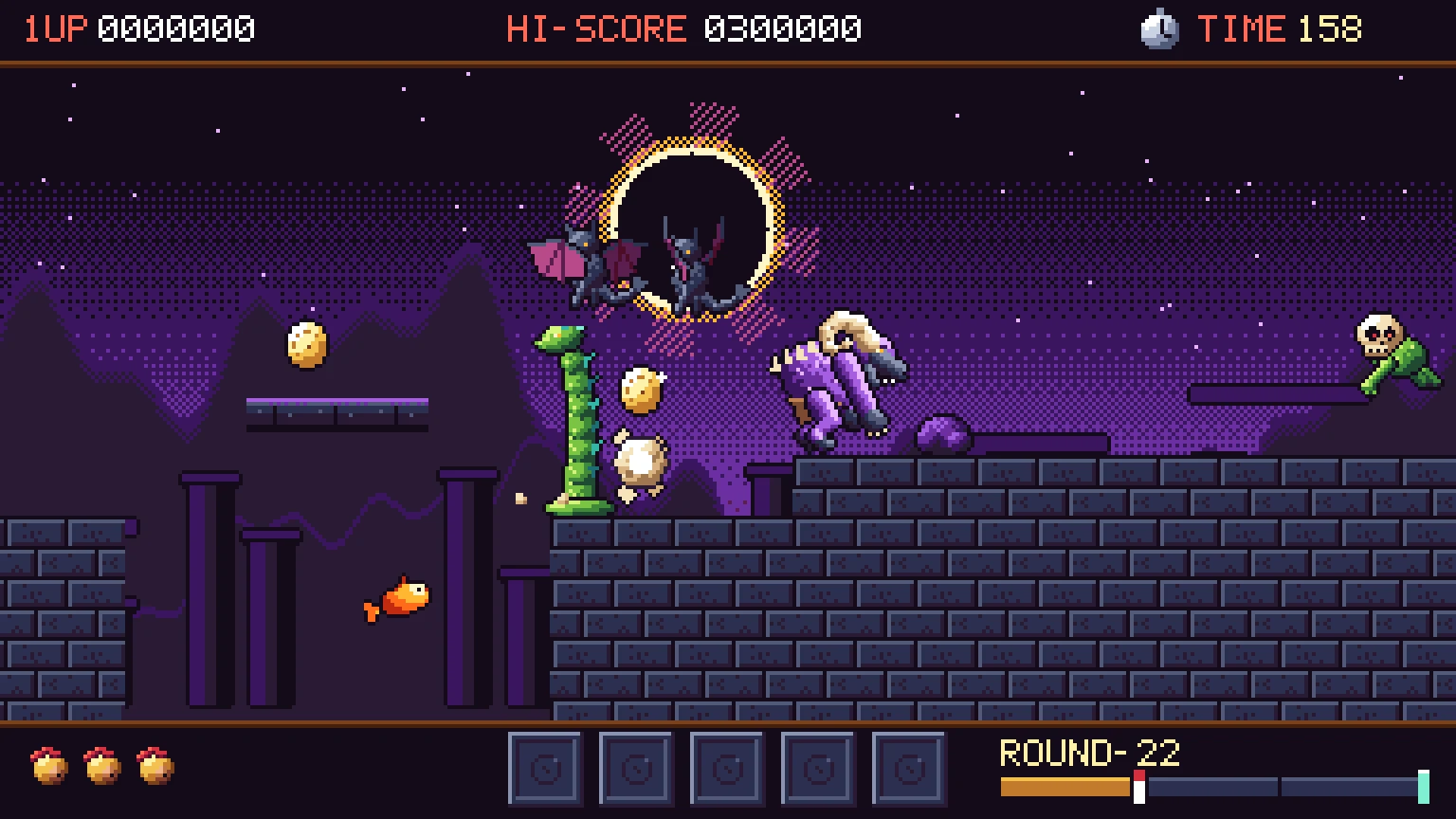
The hero makes his way through 24 rounds in six realms – from Sunfall Steppes and Cypress Vale to Ember Deeps, Sunken Agora, Cloud Stair and Eclipse Citadel – with a glaive on a chain as his weapon. One hit kills, just like at the arcade. Oracle Stones rise out of the ground and drop power-ups when the glaive breaks them, and at the end of each round a shrine adds up the time, foes slain and stones. If the clock reaches zero, the Pyre Wraith comes, passing through walls and getting faster every second.
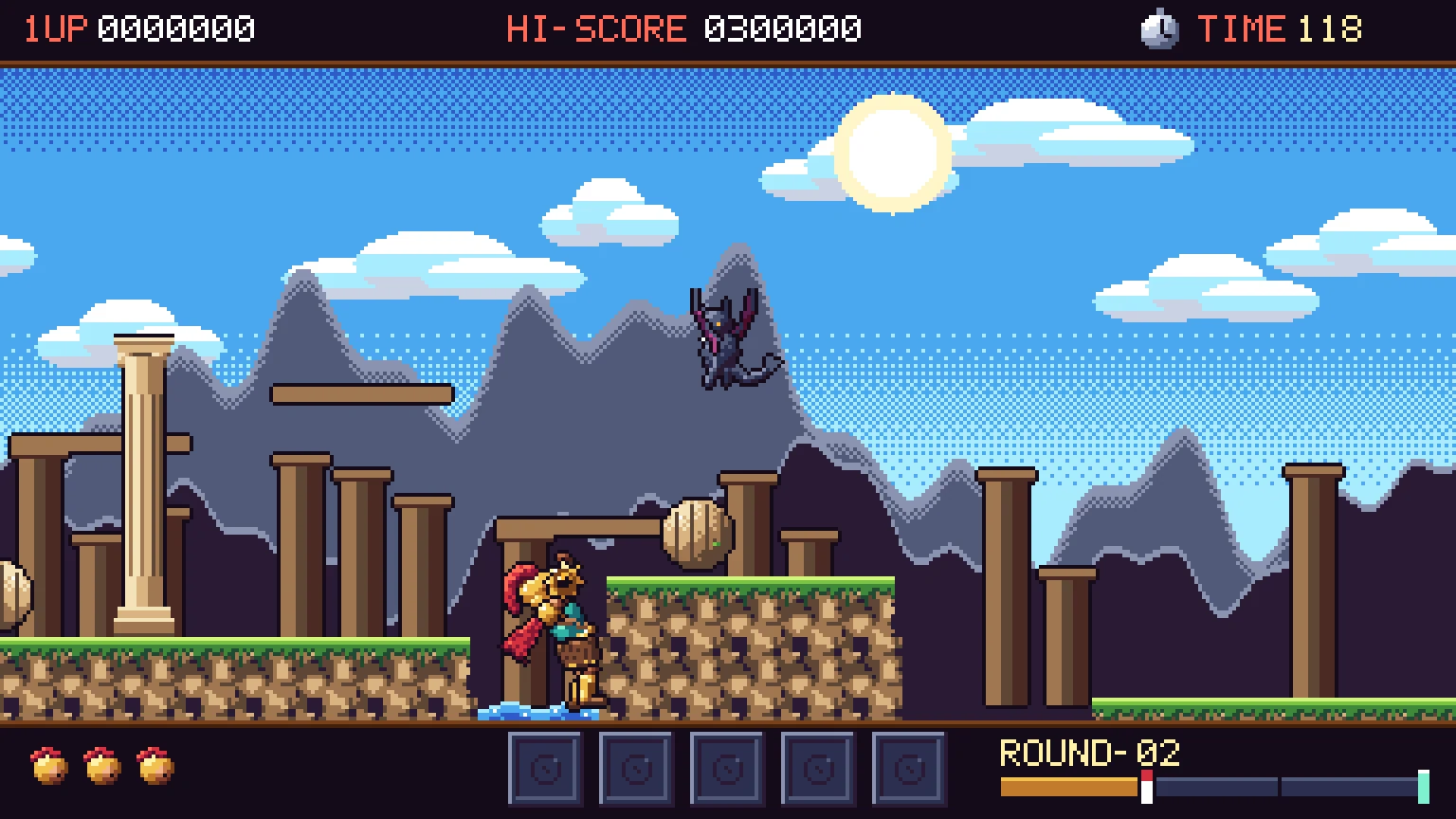
What the game has:
- 24 rounds in six realms, with water, lava or the void to fall into, ropes to climb and a map of the world of Ossaria before each new realm
- a glaive on a chain thrown forwards, crouching, in the air and in an arc overhead, and five power-ups – ZENITH, TRIDENT, HALO, RAM and COMET – that each change how it strikes
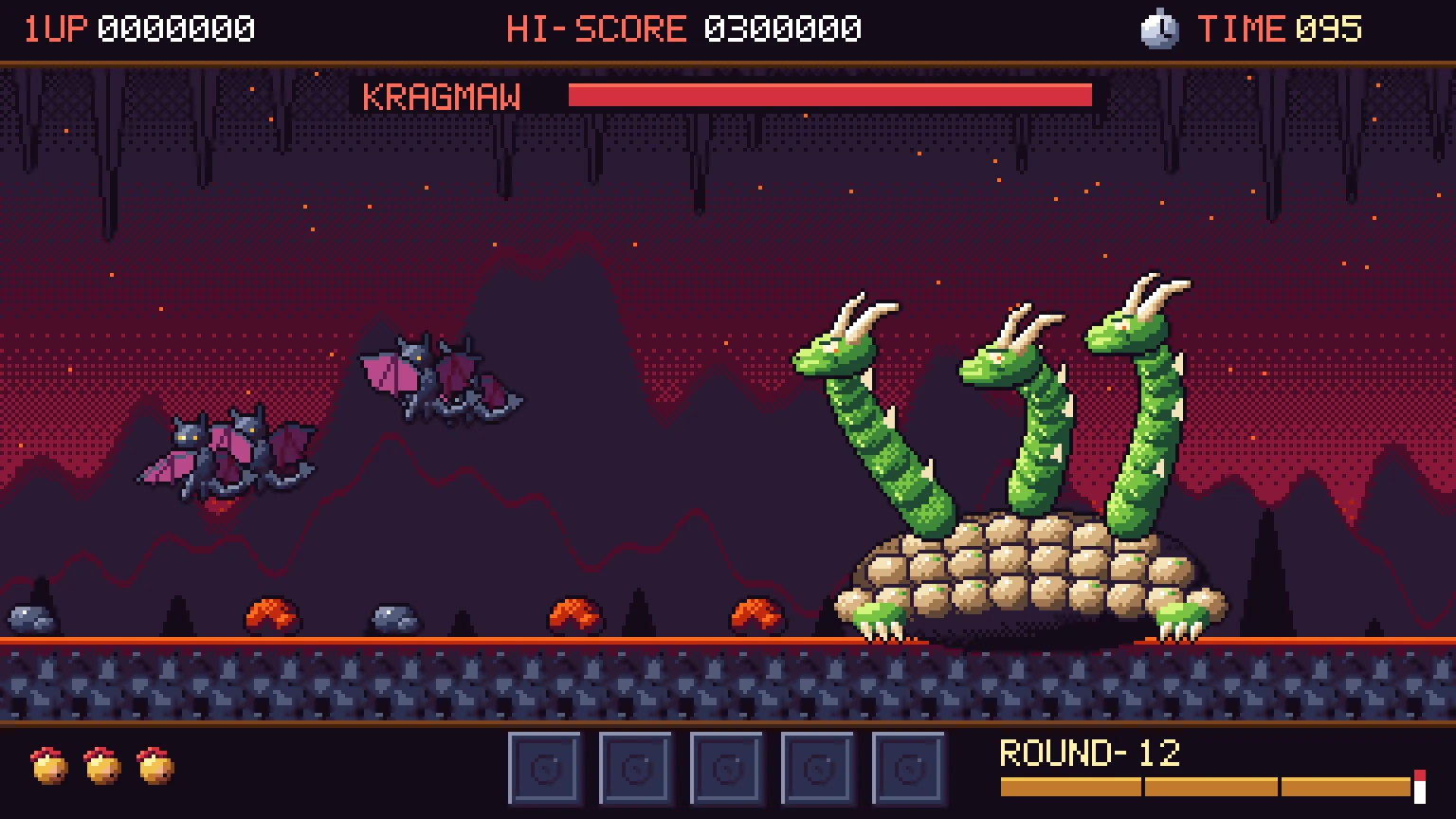
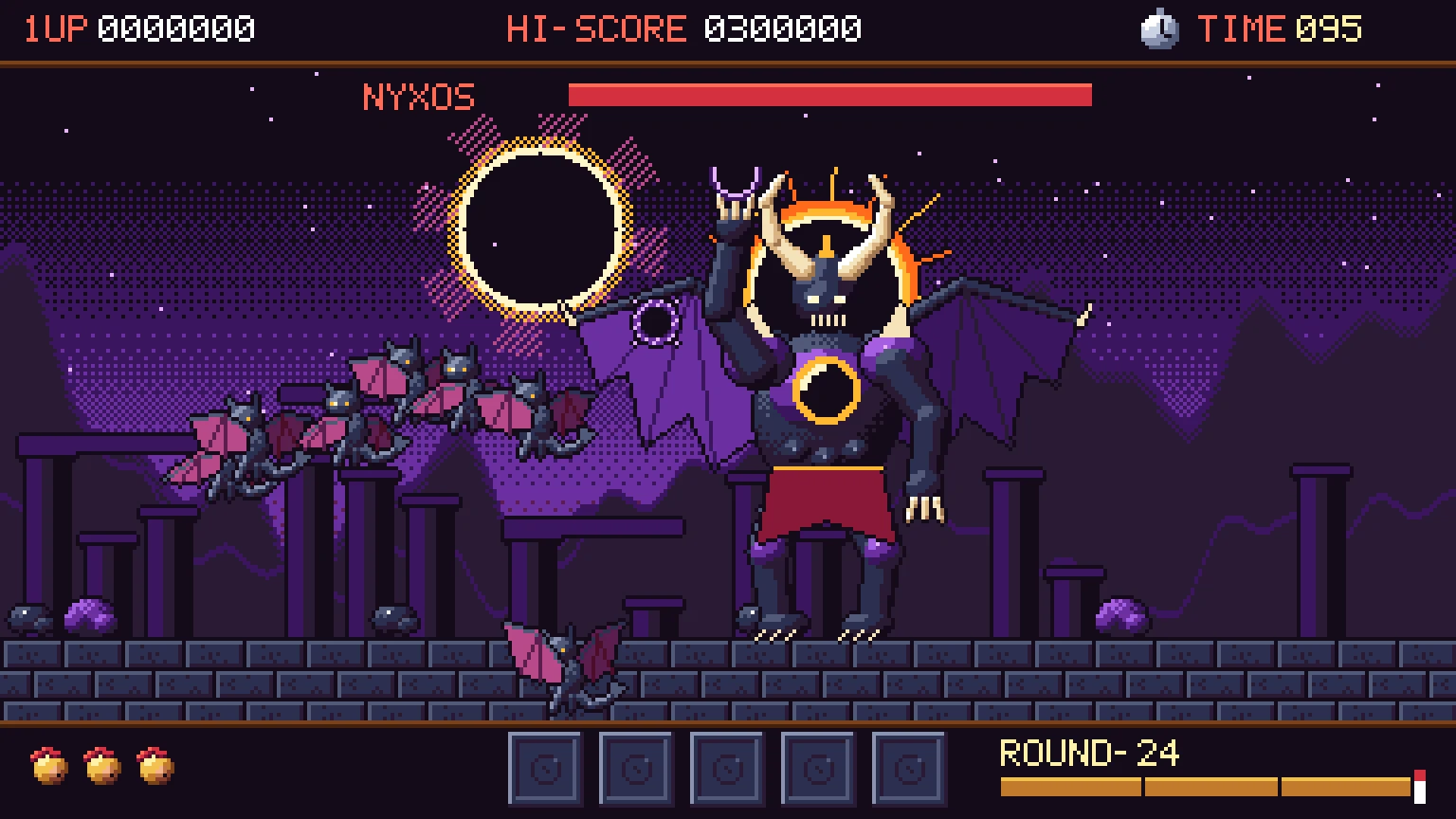
- two bosses: three-headed Kragmaw in round 12 and Nyxos with three phases in round 24
- sixteen music tracks and 45 sound effects, synthesised in the browser in chiptune style
- keyboard, gamepad and touch, rebindable keys, an assist mode and scanlines
- HALL OF HEROES, a shared high score table on the server, and continues in the first 18 rounds
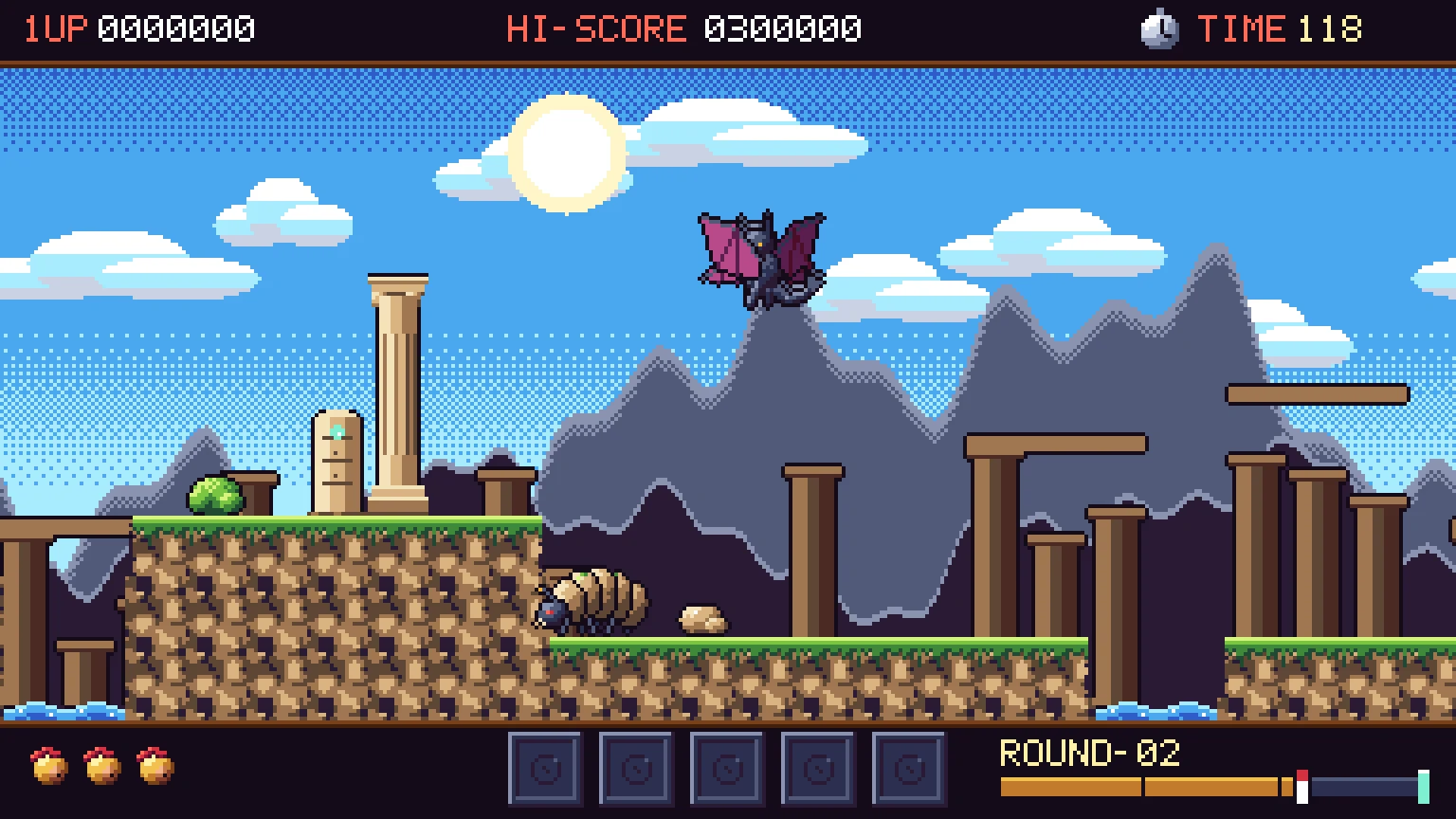
One realm per picture, and both bosses:
How it was made
It all started in Claude Design: research on the model, a game bible, every character, tile and background as finished images, game data for physics, enemies, scoring and all 24 rounds, the screens and a complete first round. The images and the data are used as they are – they're the truth for the game. Later a new design for the score bar arrived, with a rack for power-ups at the bottom, and it went in as it was.
Claude Code built the game in TypeScript and Vite on a plain canvas of 384 × 216 pixels, with no game engine. The design only had the first round, so the other 23 are built by a generator from each realm's own building blocks: pits, bridges, steps, ropes and stone pillars in the lava. A pit is never wider than the hero can jump, and a round is saved only once a test, running the game's own physics, has reached the shrine from the start. The generator is deterministic, so the same round comes out the same every time. Codex drew the icon.
Two tests hold the game together: one goes through all 24 rounds without a browser, the other plays the built game in a browser and steps it exactly – through every enemy, power-up, both bosses, the ending and a run through every round.
Along the way
Low enemies couldn't be hit. The glaive travels at waist height, and the low enemies are too short for it. The answer was a crouching throw, straight ahead at hand height. After the first playtest that throw was made to go straight instead of at an angle, and the glaive got a little longer than the design's numbers.
The background blended into the playfield. The nearest background layer was almost as bright as the ground. Now it's drawn darker, using the nearest colour from the same palette, so the palette holds.
Enemies could be stunned again and again. Jumping on an enemy's head stuns it, but it could be done again even when it was already dizzy. Now it's only stunned when it isn't already.
Compared with Rygar
Rygar is the original and the model for the mechanics. What Thaleon gives me is a game of my own with its own world, its own characters and its own music, played in the browser on the computer and on the phone.
Try it yourself
The game can be played in the browser – the link is next to the project.
Under Files you'll find IDEA.md: a description of the game and everything I learned during the build, written as a brief. Give it in full to Claude Code, ideally after a design package from Claude Design, and you have the groundwork for an arcade game of your own.